 EN
EN  IT
IT  FR
FR 
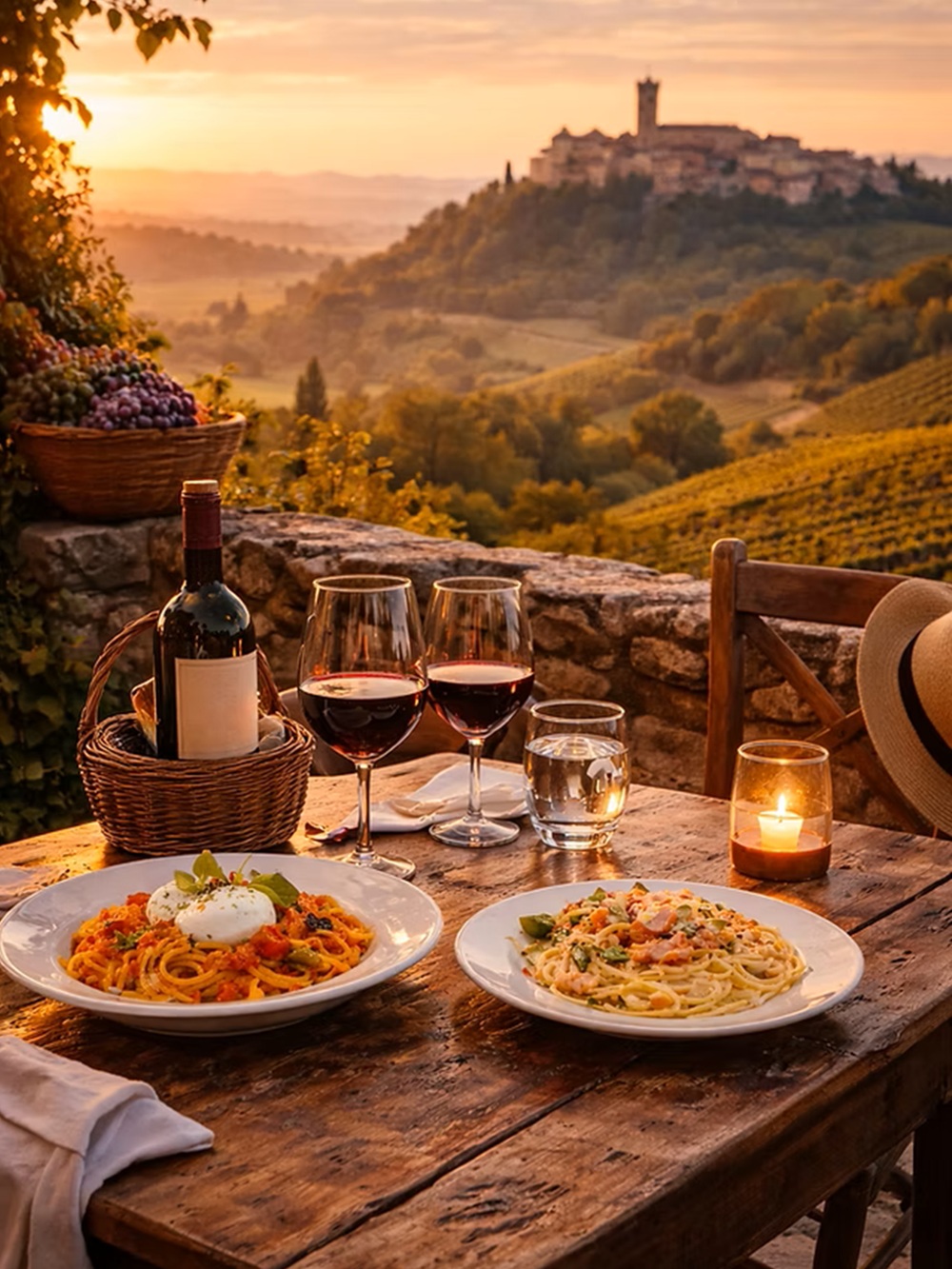
You came back from Italy with photos, memories… and a strange feeling.
Like something happened around the tables where you sat.
Something you still can’t quite put into words.
It wasn’t just the food.
Not just the wine.
Not just the sunshine.
It was the atmosphere.
What if that trip gave you, without you even realizing it, the greatest lesson in hospitality of your life?
And to experience these moments in Italy before recreating them at home, trust Revaoa, a family travel travel planner specializing in tailor-made Italian getaways.
Table of Contents
What You Really Bring Back from Italy
Most travelers return from Italy with recipe notebooks, bottles of olive oil carefully tucked into their suitcase, and photos of fresh pasta from fragrant local markets.
But what they truly experienced…
was something else entirely.
It was that three-hour lunch in Florence where nobody checked the time.
That dinner in Naples where the owner sat down with you “just for five minutes” and stayed until the very last drop of limoncello.
That village trattoria in Emilia-Romagna where your plate was refilled without asking, where the bread arrived warm, where laughter spilled out into the street.
You didn’t just eat.
You experienced something.
And that is exactly what you can bring back home with you.
Italian Gastronomy Isn’t Just Cuisine. It’s a Language.
In Italy, people don’t go to restaurants just to eat.
They go to reconnect.
The table is the center of gravity of social, family, and emotional life.
The dishes are not performances.
They are declarations.
“I made this for you” means “you matter to me.”
Italian gastronomy is an art of presence.
And that presence is exactly what you can recreate at home.
Three Travel Lessons You Can Apply Tonight
1. The Meal Begins Before Everyone Sits Down
Do you remember that moment in Italy?
The aperitivo outside, or by the doorway.
The olives being passed around.
The glass handed to you before you even sit down.
Italians don’t start hosting when guests take their seats.
They start the moment the door opens.
Hospitality is a course of its own.
At home: prepare something to snack on before everyone even reaches the table.
A sharing board.
A drink ready upon arrival.
A space where your guests can unwind before sitting down.
That time is not wasted.
It’s the moment when the evening begins to take shape.
2. Simplicity Is Not a Lack. It’s a Choice.
In Bologna, in a no-frills osteria, you had a pasta al ragù you still talk about today.
Not because it was complicated.
Because it was right.
Italians don’t try to impress with quantity.
They leave a lasting impression with quality.
Two or three thoughtfully prepared dishes are worth infinitely more than an overcrowded table.
At home: resist the temptation to overdo it.
One antipasto to share, a carefully chosen pasta, a dessert that ends the evening softly.
That’s enough.
Actually, it’s better than enough — it’s elegant.
Mastered simplicity is the real luxury.
3. The Rhythm Matters as Much as the Menu
Maybe that’s what stayed with you most in Italy: nobody was rushing.
The dishes arrived.
But between them, there was space.
Breathing room.
Time to talk, to laugh, to finish the wine still sitting in the glass.
In Italy, people don’t eat quickly. They live around the table.
That rhythm has nothing to do with Michelin stars.
It’s an intention.
At home: leave time between courses.
Wait for the conversations to settle before bringing out the next dish.
Don’t rush.
Your guests are not there to move from plate to plate — they’re there to share a moment with you.
What Travel and Italian Food Teach You About Yourself
Traveling through Italy is also about observing.
Watching a Nonna serve polenta by carrying the pot around the table.
Watching a Sicilian host choose the best piece and place it onto a guest’s plate without even asking.
Watching a glass of wine get shared before anyone even tastes it.
Those gestures are not learned from a cookbook.
You absorb them. You experience them.
And then one day, they naturally return in your own home.
Travel taught you something about yourself as a host.
It showed you that hosting is not a performance.
It’s a way of being with others.
Bringing Italy Home: In Practical Terms
You don’t need to recreate a movie set or hunt down impossible-to-find ingredients.
What you can do is embody the spirit.
The spirit of cucina italiana is:
- Choosing simple but high-quality ingredients (good olive oil, durum wheat pasta, authentic Parmigiano Reggiano)
- Building a menu with progression, not accumulation
- Preparing ahead of time so you can actually be present during dinner
- Creating a lively table: shared dishes in the center, not overly rigid individual plates
- Letting the meal last as long as it wants to
And above all: be there.
Really there.
Not busy managing the kitchen.
Not apologizing for what isn’t perfect.
Not trying to impress.
Just present, with your guests, inside the moment.
Also read: The Art of Italian Hosting: The Complete Guide to Creating Unforgettable Dinner Parties


Let’s talk together!