 EN
 FR


We don't always remember what we ate at a dinner party. But we do remember the atmosphere around the table, the conversations that carried on long after dessert, and that wonderful feeling of having shared a genuine moment with others. Because hosting isn't just about preparing a good meal. It's also about creating the right conditions for everyone to feel comfortable, included, and able to enjoy the evening.
You can master your recipes, choose beautiful ingredients, and pay attention to presentation. Yet despite all that effort, some dinner parties still feel surprisingly ordinary. On the other hand, a meal prepared without any particular fuss can leave a lasting impression. The difference often lies in everything that happens beyond the kitchen: the welcome, the atmosphere, the pace of the meal, the attention you give your guests, and the way everything seems to fall naturally into place.
This is an essential part of the Art of Italian-style hosting. In many Italian families, a successful dinner isn't measured by how sophisticated the menu is or how perfectly the table is set. It comes from the pleasure of being together, the generosity of sharing, and an atmosphere where no one feels the need to check the time. Nothing spectacular or particularly complicated, just a series of thoughtful little touches that bring the whole evening together.
In my own family, our most memorable moments aren't just associated with the dishes we prepared. They're also about the long evenings around the table, conversations that picked up again after the meal, bursts of laughter, and those moments when we simply lost track of time. Food, of course, played its part, but it was only one part of what made those moments so special.
This is the perspective I want to share with you in this guide. You'll discover the six pillars that help you think about a dinner party as a whole, from the preparations to the very last moments spent with your guests. It's a structured yet approachable way of hosting, without turning every gathering into an extraordinary event. The goal is simply to help you host with greater confidence, find the right balance, and create evenings your loved ones will remember fondly.
Because ultimately, the success of a dinner party isn't measured only by what you put on the table. It's also about the experience your guests have in your home.
Free Guide: 10 Golden Rules for Hosting Italian-Style
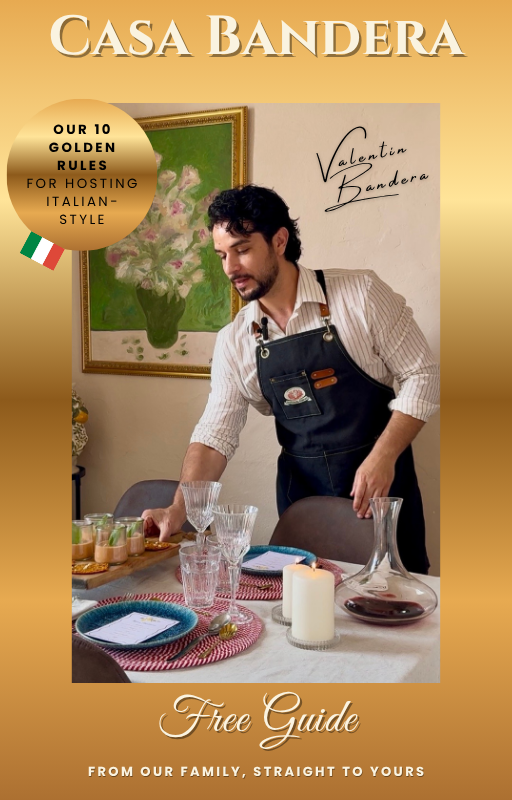

"At Casa Bandera, what matters most is that everyone feels at ease, enjoys the moment, and wants to come back."
"Behind this apparent simplicity lies an entire Art of hosting, built on thoughtfulness, generosity, and the joy of sharing."
— Casa Bandera, from our Famiglia to yours
Table of Contents
The Art of Italian-style hosting is first and foremost about seeing a meal as a moment to be shared. It's not about recreating a particular setting or following a formal ritual, but about bringing together the right ingredients to make your guests feel welcome and allow the evening to find its natural rhythm.
If you've ever wondered how to host an Italian-style dinner party without stress, without going overboard or spending the entire evening in the kitchen, this guide is for you. We'll explore how to bring together thoughtful planning, the menu, the Art of the table, and attention to your guests to create a harmonious dinner party, without losing sight of what's most important: enjoying the evening yourself, too.
Why Hosting The Italian Way Changes Everything
A meal can be excellent without necessarily leaving a lasting impression. Perhaps you've experienced this yourself: the food was delicious, the table beautifully set, and your guests loved what they ate, yet the evening lacked that little something that makes you want to tell people about it the next day. On the other hand, sometimes all it takes is a very simple menu, a few good bottles of wine, and a warm atmosphere for everyone to have a truly memorable time.
So the difference isn't necessarily on the plate. It comes down to how the entire meal is planned and experienced. I gradually became aware of this approach while living in Italy, particularly in Bologna, where I discovered ways of hosting that stayed with me because of how natural they felt. There was no need for endless preparations, an immaculate presentation, or particularly elaborate recipes. And yet, these meals had something special about them: everyone felt at ease, conversations flowed naturally, and no one seemed in a hurry to leave.
This philosophy is built around a fairly simple idea: you don't invite people over just to feed them, but to share a moment with them. The meal then becomes a complete experience, with every element contributing to it. The menu matters, of course, but it works hand in hand with the welcome, the choice of drinks, the table setting, the atmosphere, and the pace of the evening. It's this balance that makes all the difference.
There are three complementary dimensions to consider:
- What you offer: the menu, the ingredients, the drinks, and the way you present the meal.
- How your guests feel: their comfort, the welcome they receive, the convivial atmosphere, and the pleasure of spending time together.
- How you bring the moment to life: your planning, your availability, and the pace you give the evening.
Focusing exclusively on the food means considering only one part of the dinner party. Being a good cook is certainly an advantage, but it shouldn't mean spending hours in the kitchen or watching every little detail at the expense of your guests. The goal is to prepare enough in advance to be available once the evening begins, choose a menu that works for you, and leave room for spontaneity.
That's when your perspective starts to change. Instead of trying to impress at all costs, you learn to create an atmosphere: a welcoming table, a meal that unfolds without rushing, dishes that invite everyone to share, and conversations you can genuinely take part in. Nothing needs to be spectacular. Every element simply has its place in making the moment special.
That's the heart of the Art of Italian-style hosting: giving as much thought to what you serve as to the experience your guests have throughout the evening. It's no longer about piling on recipes or decorations, but about understanding how the different elements of a dinner party can work together.
What you'll discover in this guide, then, isn't another cooking method. It's a complete approach to planning your gatherings with greater confidence and peace of mind. Menus, recipes, practical advice, and preparation steps are explored in greater detail in the related articles throughout this content cluster, helping you move from the big picture to putting it into practice.
The 6 Pillars of The Art of Italian-Style Hosting
A harmonious dinner party doesn't depend on one isolated detail, but on the balance between several elements. Over time, first in Bologna and then through my travels and discoveries across Italy, I came to understand that the meals that leave the best memories often have one thing in common: they feel simple, almost spontaneous, even though a great deal of thought has gone into making them happen.
That preparation doesn't mean planning everything down to the minute. Quite the opposite: it creates room for the unexpected and allows you to enjoy your guests even more. When the menu is well suited to the occasion, the main preparations are taken care of in advance, and the atmosphere has been considered as a whole, you no longer need to manage every little detail at the last minute. The evening can then unfold more naturally, without feeling overly orchestrated.
To help explain this approach, I've chosen to organize it around six complementary pillars. Together, they cover the main elements of a successful dinner party: your mindset as a host, preparation, menu planning, the flow of the meal, the Art of the table, and the atmosphere you want to create. Each plays a specific role, but it's how they come together that gives the evening its character.
In this article, we'll lay the foundations of this overall approach: understanding the purpose of each pillar, why it matters, and how it contributes to your guests' experience. For more practical guidance, the related articles in this content cluster explore more specific topics, with detailed advice on menus, recipes, timing, and the different aspects of planning.
The idea isn't to follow a rigid method or add more pressure to your preparations. Think of these six pillars as guideposts to help you make better decisions, distribute your efforts more effectively, and find your own balance. Once you understand how they work together, hosting becomes more natural: you know where to focus your attention and can spend more time on what really matters.
Let's take a closer look at the six pillars that can turn a dinner at home into an unforgettable Italian experience.
Pillar 1 — The Host's Mindset

Before thinking about the menu, the decorations, or how the evening will unfold, there's one essential question to ask yourself: what kind of mindset do you want to bring to welcoming your guests? The way you experience the occasion yourself has a direct influence on the atmosphere you'll create. You can prepare the most wonderful recipes and take care of every detail on the table, but if you're still worrying about unexpected hiccups, constantly rushing, or unable to enjoy the evening, your guests are likely to sense that tension.
In my family, my mother has always placed great importance on this aspect of hospitality. Even before discussing what we were going to cook, she would often come back to one very simple idea: what matters is how your guests feel in your home. That consideration for others sums up the spirit I grew up with. Hosting isn't about showing off your skills; it's about making sure everyone feels expected, welcome, and free to enjoy the moment.
This distinction completely changes the way you approach a dinner party. When your main goal is to impress, you risk taking on too many preparations, trying to control everything, and setting yourself standards that are difficult to meet. But when your first intention is simply to share a lovely moment, you can make choices that are more thoughtful and more realistic: a menu you know well, a welcoming table, and enough time to enjoy your guests. Generosity isn't measured by the number of courses you serve, but by the attention you give to the people gathered around you.
This philosophy rests on three complementary qualities:
- Generosity: welcoming people with genuine pleasure, sharing what you love, and making sure everyone naturally feels included.
- Simplicity: choosing thoughtful, genuine gestures rather than constantly trying to do more.
- Presence: being truly available to your guests, joining the conversations, and enjoying the evening yourself.
Imagine a dinner party where you can greet your loved ones with a smile, take the time to catch up with them, and sit down at the table without constantly thinking about the next task on your list. That availability helps create a relaxed atmosphere. Your guests feel more comfortable, conversations flow naturally, and the evening can find its own rhythm. It's not about playing a role or forcing a sense of conviviality, but simply about enjoying the company of the people you've brought together.
Hosting the Italian way doesn't mean doing more; it means giving more importance to the quality of the moment you share. Perfection isn't a requirement for a successful dinner party. Imperfect preparations, a dish that doesn't look exactly like the photo, or a last-minute surprise ultimately matter very little if your guests feel comfortable and you enjoy their company, too.
Key takeaways:
- The host's mindset directly influences the atmosphere of the dinner party.
- Generosity, simplicity, and presence matter more than the pursuit of perfection.
- Trying to impress can create unnecessary pressure; focusing on sharing helps build genuine connections.
Pillar 2 — Planning & Timing

A relaxed dinner party can look completely spontaneous to your guests. Yet behind that effortless feeling, thoughtful preparation often makes all the difference. Organizing a dinner doesn't mean planning every minute or turning your home into a formal dining venue. It's really about thinking ahead and preparing the key elements so you're not left trying to do everything at the last minute.
When I lived in Italy, I used to think that casual dinners with friends and romantic Italian-style dinners seemed to come together almost effortlessly. Everyone would gather, the dishes would make their way to the table, and the evening would unfold without anyone appearing to give much thought to the planning. Over time, I realized that this apparent spontaneity often came down to careful preparation. My Nonna, in particular, always thought through the different stages of a meal well before her guests arrived: what could be prepared ahead of time, what needed to wait until the last minute, and how the courses would flow from one to the next.
That experience taught me something essential: if you want to feel relaxed during dinner, much of the work needs to be done beforehand. Without that preparation, you risk constantly going back and forth between the kitchen and the table, forgetting little details, or having to change your plans as the evening unfolds. Instead of enjoying the company of your guests, you end up focusing on logistics. And even if you do your best to hide it, all that rushing around can eventually affect the atmosphere.
Effective planning comes down to three principles:
- Think ahead: prepare everything you can in advance, from grocery shopping and food preparation to setting the table and organizing drinks.
- Make the evening easier: keep the number of tasks to handle during dinner to a minimum so you can be available and enjoy your guests.
- Keep things flowing: organize each stage of the meal thoughtfully so that transitions happen naturally.
In practical terms, this means choosing a menu that fits the time you have available, identifying which dishes can be prepared the day before, and planning when each course needs to be finished or served. You can also set the table before your guests arrive, prepare the drinks, and organize your workspace so you're not constantly searching for a utensil or an ingredient. These details may seem minor, but together they make a real difference once the evening gets underway.
Timing matters just as much. An enjoyable meal isn't only about the quality of the food, but also about the way each course is served. Give your guests time to chat over aperitivo, avoid rushing everyone to the table, and don't leave long gaps between courses. The right pace isn't necessarily the fastest one. It's the rhythm that allows the meal to unfold naturally, without feeling rushed, while leaving plenty of room for conversation.
Thoughtful planning becomes almost invisible once your guests arrive. You no longer need to keep an eye on every little detail or rush from one room to another. You can welcome your guests, serve the food, join the conversation, and fully enjoy the evening. That's precisely what preparation is for: not to control every aspect of dinner, but to give you the freedom to be part of the moment.
Key takeaway: good planning should make dinner run smoothly without anyone noticing the effort behind it. If you spend the entire evening managing preparations, chances are some of that work could have been done ahead of time.
Common mistake: confusing organization with constant control. Preparing each stage in advance is helpful; trying to oversee everything while your guests are there can actually keep you from enjoying the evening.
Remember:
- Planning ahead helps you stay available to your guests throughout dinner.
- Good timing keeps the meal flowing and makes everyone feel comfortable.
- A little improvisation can be lovely; having to organize everything at the last minute is another story.
If you'd like to put these principles into practice, I've created a complete guide to organizing an Italian dinner party, from the first preparations to the moment your guests arrive. You'll find a detailed timeline covering what to do two days ahead, the day before, and on the day itself, so you can spread out the tasks without feeling overwhelmed at the last minute.
Explore the complete guide to planning an Italian dinner party from start to finish and get ready for your next evening with greater confidence and peace of mind.
Pillar 3 — The Art of Planning Your Menu

When planning a dinner party, the first instinct is often to look for new recipes, come up with as many ideas as possible, and offer guests a little bit of everything. Yet a generous menu doesn't necessarily mean serving a large number of courses. In fact, it can become counterproductive when there's no real sense of balance: preparations start piling up, flavors compete with one another, and the meal becomes more complicated to organize for both the host and the guests.
Over time, I've come to understand that a good Italian menu is built more on thoughtful choices than on quantity. Every dish should have its place and contribute to the overall balance of the meal. It's not simply about serving several recipes you happen to love, but about creating an enjoyable progression, from the first bites to dessert. The menu should follow the natural rhythm of the evening, without making guests feel as though they're being rushed from one course to the next.
This approach is all about keeping things balanced and uncomplicated. A shared antipasto to start, a generous main course, and a dessert that brings the meal to a pleasant close can be more than enough. What matters is choosing dishes that complement one another, varying textures and flavors, and taking into account the season, the number of guests, and the time you have available to cook. A successful menu doesn't need to look impressive on paper. Above all, it should be enjoyable to eat and realistic to prepare.
To create this kind of harmony, three principles deserve particular attention:
- Consistency: choose dishes whose flavors, ingredients, and cooking styles naturally complement one another.
- Balance: vary textures, intensity, and portion sizes to avoid a meal that feels too heavy or repetitive.
- Thoughtful simplicity: focus on a few well-chosen dishes that you can prepare comfortably, rather than filling the menu with complicated recipes.
Your menu should also reflect the way you plan to organize the evening. A particularly delicate recipe that needs to be finished at the last minute may keep you in the kitchen while your guests are already seated. On the other hand, a dish that can be partly prepared ahead of time gives you much more freedom. So you need to think not only about what you want to serve, but also about how you'll prepare it. This connection between cooking and planning is exactly what makes a menu truly suited to hosting.
A good menu isn't simply a succession of dishes: it's a progression your guests discover as the meal unfolds. When it's thoughtfully put together, you can cook under better conditions, each course finds its natural place, and everyone gets to enjoy the evening. Generosity is no longer measured by abundance, but by the pleasure the meal brings as a whole.
Key takeaway: think of your menu as a harmonious whole, where every dish has a purpose and contributes to the rhythm of dinner.
Common mistake: adding more courses to create an impression of abundance without considering how well they work together or how much extra preparation they involve.
Remember:
- A well-balanced Italian menu is built around a natural progression, not an accumulation of courses.
- Every dish should contribute to the overall balance of the meal.
- A thoughtfully planned menu takes into account both your guests' enjoyment and the time needed to prepare everything.
To take things a step further, I've dedicated an article to putting together an easy Italian menu for entertaining guests. You'll discover how to combine antipasti, main courses, and desserts to create a delicious, welcoming meal that's just right for the occasion.
Discover how to put together an easy Italian menu for entertaining guests and find the right balance between enjoyment, simplicity, and generosity.
Free Guide: 10 Golden Rules for Hosting Italian-Style
Pillar 4 — Practical Essentials
Recipes naturally play an important role when preparing a dinner party. You often find yourself wondering what to cook when you're having guests over, which dishes to choose, or how to put together a menu everyone will enjoy. Yet a successful meal also depends on much less obvious decisions: the products you select, the tools you use, and the few essentials that genuinely make your time in the kitchen easier.
In Bologna, I was particularly struck by the way some of my friends cooked with very basic equipment. No sophisticated gadgets or endless collections of kitchenware, just a few reliable utensils and good-quality ingredients, used thoughtfully. It reminded me of a fundamental principle of Italian cooking: there's no need to multiply ingredients or techniques when you start with quality basics and know how to bring out their best.
A good extra virgin olive oil, quality pasta, a well-chosen tomato sauce, or a wine that complements the menu can make a much greater difference to the final result than an unnecessarily complicated recipe. This doesn't mean you always have to buy the most expensive products. It's about learning to recognize which ingredients genuinely add value to the meal you're preparing, then building your choices around them.
Practical essentials come down to three complementary elements:
- Quality ingredients: choose products suited to your recipes, paying particular attention to their origin, freshness, and quality.
- The right tools: keep a selection of simple, reliable, and versatile kitchen utensils that make preparation easier without unnecessarily cluttering your kitchen.
- Thoughtful choices: learn to distinguish what genuinely adds value to a meal from what simply makes things more complicated.
This approach is particularly useful when you're hosting. The right equipment helps you work more efficiently, while carefully chosen ingredients reduce the need for last-minute adjustments and unnecessary preparation. You can focus on the essential steps and have greater control over what you're cooking. Rather than trying to make up for a lack of preparation with complicated techniques, you rely on solid foundations and choices you know you can trust.
It's also worth thinking about drinks and the role they play throughout the meal. A well-chosen wine can complement the flavors of a dish and bring harmony to the menu. Here again, there's no need to offer several bottles or look for particularly sophisticated pairings. A few simple guidelines are enough to help you choose wines that work well with your dishes and your guests' preferences.
True mastery isn't about owning more and more, but knowing what you actually need. Your guests may never notice which kitchen utensil you used or how much time you spent selecting your ingredients. What they will experience, however, is the quality of the food and how effortlessly the meal unfolds.
To explore the subject of drinks further, take a look at our guide to Italian wine pairings for a successful dinner party, with practical tips for choosing bottles that complement your menu.
Key takeaways:
- The quality and suitability of your ingredients matter more than the complexity of your recipes.
- A few reliable, versatile kitchen tools are often all you need to cook efficiently.
- A common mistake is accumulating gadgets and ingredients that serve no real purpose for the meal.
Pillar 5 — The Art of The Table & Atmosphere

Before they even discover the menu, your guests begin to take in the atmosphere of the place where they'll be spending the evening. The lighting, table arrangement, textures, colors, and little decorative touches all contribute to that first impression. They don't determine the success of a dinner party on their own, but they help create a setting where everyone feels welcome.
When I think back to family meals in Italy, the tables weren't always perfectly arranged, and the decor never followed a particular theme. At my Nonna's house, the table was above all full of life. Dishes were passed around, glasses were refilled, conversations overlapped, and laughter was often part of the meal. What made those moments so enjoyable wasn't flawless decoration, but the warmth and spontaneity that filled the room.
This is an important distinction when it comes to the Art of the table. A beautiful table shouldn't become a static display that guests are afraid to disturb. It should remain practical, comfortable, and suited to the meal. A few thoughtfully chosen elements are often enough to give it character: a linen tablecloth, beautiful dinnerware, the right glasses, a few flowers, or some candles. The goal is to create visual harmony without overcrowding the space or making serving more complicated.
The overall atmosphere comes down to three key elements:
- Lighting: choose soft, warm lighting that makes the room feel inviting without being too dim to enjoy the meal.
- A simple table setting: bring together textures, colors, and dinnerware in a harmonious way, while leaving enough room for your guests and the dishes.
- The host's attitude: help create a relaxed atmosphere by remaining available, welcoming, and attentive to everyone's comfort.
These elements work together. Pleasant lighting can completely transform the way a room feels, while an overcrowded table can get in the way of conversation and sharing dishes. In the same way, beautifully arranged decor loses much of its appeal if the host is too busy managing the service to enjoy time with their guests. Atmosphere isn't just about what you see. It also depends on how the meal unfolds and how comfortable everyone feels around the table.
Picture a room bathed in soft light, a welcoming table with plenty of space for everyone, and a meal that unfolds without anyone feeling rushed. Conversations flow naturally, dishes are shared, and no one feels obliged to follow a formal set of rules. At first glance, there's nothing extraordinary about this kind of setting, yet it gives the dinner a personality all its own.
The goal isn't to create a perfect scene, but a space where your guests want to linger. An elegant table can still feel warm and inviting, thoughtful decor can remain simple, and a refined dinner can leave plenty of room for spontaneity. It's this balance between beauty and conviviality that gives Italian-style table setting its true meaning.
Key takeaways:
- The atmosphere makes an impression as soon as guests arrive, even before the meal begins.
- Lighting, a simple table setting, and the host's attitude all contribute to creating a welcoming atmosphere.
- A common mistake is prioritizing perfect decor at the expense of comfort and conviviality.
If you'd like to explore this aspect further, take a look at our guide to the Art of the Italian table. You'll discover how to choose your dinnerware, arrange your cutlery, and create elegant, welcoming decor without making the setting feel artificial or overdone.
Pillar 6 — Emotion & Human Connection

A dinner party can have all the ingredients of a successful gathering: a carefully chosen menu, thoughtful planning, and a welcoming table. And yet, sometimes it still lacks that special quality that turns an enjoyable meal into a lasting memory. What makes an evening unique isn't limited to what's served or how everything is organized. It also comes down to the connections that develop around the table and the emotions people share.
In my family, meals were never just appointments centered around a menu. They were part of everyday life, filled with lively discussions, stories told time and again, and sometimes rather noisy moments, but always deeply human ones. Some memories are tied to a particular dish, others to an unexpected conversation or a shared burst of laughter. Looking back, I realize that these are often the moments that give our time together its greatest value.
This is what I call the human side of the dinner experience. It takes shape through simple gestures: taking the time to listen to a guest, making sure everyone has a chance to join the conversation, noticing when someone is feeling a little left out, or allowing a discussion to continue without immediately moving on to the next course. These gestures don't require any special skills, but they do mean stepping away from the constant demands of serving and managing the evening.
Three elements are particularly important in creating this connection:
- Connection: encourage conversation and create an environment where everyone can naturally take part.
- Authenticity: be yourself rather than trying to embody the perfect host or recreate a gathering that doesn't feel true to who you are.
- Attentiveness: consider the people around your table, what they enjoy, and how they're experiencing the moment, without overlooking your quieter guests.
This also means knowing when to leave room for spontaneity. You don't need to entertain everyone every minute, prepare conversation topics, or constantly try to avoid silence. An enjoyable evening isn't a succession of perfectly orchestrated moments. Some conversations take their time, others pause and pick up again, and sometimes everyone simply enjoys a quiet moment together. That's part of what conviviality is all about, too.
Your role is first and foremost to create the right setting for these connections to happen. By staying available, welcoming everyone with genuine attention, and avoiding the urge to control every aspect of the meal, you allow your guests to find their place naturally. Little by little, conversations become more spontaneous, and interactions begin to take their own course.
At its heart, serving a complete Italian dinner is also a way to bring people together and give them a moment to share. The food adds to the pleasure of the evening, but it's the conversations, emotions, and shared memories that make it truly special. A dinner doesn't have to be perfect to become unforgettable. Above all, it should reflect the people who are part of it.
Key point to remember: the memories of a dinner party aren't built around the food alone, but also through conversations, thoughtful gestures, and moments shared among guests.
Common mistake: trying to entertain or control every moment, when conviviality often emerges naturally once you allow conversations to unfold on their own.
Key takeaways:
- The human connection gives a dinner a value that goes beyond the pleasure of the meal itself.
- Connection, authenticity, and attentiveness help create lasting memories.
- The host's role is to encourage meaningful interactions, not to direct every moment of the evening.
The Subtle Mistakes That Can Ruin a Dinner without You Realizing It
Some details can disrupt the atmosphere of a dinner party without you immediately realizing what's causing it. The menu is a success, your guests seem happy, and everything appears to be running smoothly. Yet certain hosting habits can gradually interrupt the natural flow of the evening and keep everyone from fully enjoying the moment.
These aren't necessarily major mistakes, but rather small behaviors that can slowly draw attention away from what really matters. For example:
- Talking too much about preparations and logistics once your guests are already seated.
- Feeling the need to fill every silence, even when no one seems uncomfortable.
- Constantly getting up from the table to check something or prepare the next course.
- Monitoring every stage of dinner instead of letting things unfold naturally.
- Giving more importance to the flawless execution of the evening than to the people around you.
I've often noticed a different approach in the way my mother hosts. She doesn't try to make a show of every little gesture or draw attention to everything she's prepared. She simply knows what matters when it comes to making everyone feel comfortable, and she focuses on the details that count. Her way of hosting is a reminder that a lovely gathering doesn't always depend on how much effort you put in, but on how thoughtfully you put it to use.
A dinner can be perfectly planned from a culinary standpoint and still lose some of its charm if the host remains constantly preoccupied with how things are going. When you spend the evening checking, correcting, and anticipating every little thing, you risk creating unnecessary commotion. By contrast, when the main stages of the evening have been thought through in advance, it's much easier to stay present and let the evening unfold at its own pace.
Ultimately, a natural flow is one of the best signs of a well-planned gathering. It doesn't mean everything has to go exactly as expected, but rather that little surprises don't take over the evening. You can stay flexible, adapt to the circumstances, and preserve what really matters: the pleasure of being together.
To explore this topic further, take a look at our guide to the 10 mistakes to avoid when hosting guests the Italian way. You'll discover the habits that can make hosting more complicated and the best ways to avoid them.
What a Successful Italian Dinner Party Looks Like
A successful Italian dinner party isn't just about a beautiful table or an especially elaborate menu. Above all, you can recognize it by the atmosphere that gradually takes shape throughout the evening. Guests arrive, take their time catching up, share a few stories over a drink, and gradually discover what you've prepared for them. Nothing feels rushed, and everyone can settle into the rhythm of the meal in their own way.
From the moment your guests arrive, a few thoughtful details help create that feeling of comfort: pleasant lighting, a home that's ready to welcome everyone, and a host who's available to greet them. Sometimes the first conversations begin before everyone has even arrived. Drinks are shared, conversations overlap, and the transition to the table happens naturally, without the need to follow a rigid schedule.
Once everyone is seated, the meal gradually finds its rhythm. Each course arrives at the right moment, drinks complement the different dishes, and conversation becomes just as important as what's on the plates. Everyone takes the time to discover the food, help themselves to another serving, share an anecdote, or continue a conversation. The table feels lively and welcoming, without giving the impression that every detail has been arranged to be admired rather than enjoyed.
As the evening goes on, conversations sometimes become more personal, topics drift away from the food, and the hours pass without anyone really noticing. Dessert is finished and the plates have been cleared, but no one seems in a hurry to leave the table. A coffee, one last drink, or simply a conversation that carries on is enough to make the moment last a little longer.
It's often at this point in the evening that you recognize a truly successful dinner party. The meal is over, and yet no one gets up right away. Glasses are still on the table, conversations continue at an easy pace, and everyone enjoys a few more moments together before saying goodbye. There's nothing left to add or organize. The moment simply speaks for itself.
That's when you realize that the success of the evening wasn't just about the recipes, the decorations, or the quality of the service. All these elements helped create the right setting, but what people will remember most is the pleasure of having spent time together. That's the difference between preparing a meal and creating a truly memorable shared experience.
Why This Kind of Dinner Party Always Works
There's nothing mysterious about this sense of ease. It comes from a series of thoughtful choices that, taken together, help the evening flow naturally. The menu has been planned around the time available, preparations have been taken care of in advance, the table feels welcoming, and the host can give their attention to their guests. None of these elements needs to be spectacular to make a real difference.
Three principles help explain this balance:
- Flow: each stage of the meal follows naturally, without unnecessary interruptions or rushing.
- Simplicity: every choice suits the occasion and avoids adding complications that bring no real value to the evening.
- Presence: the host isn't constantly caught up in logistics and can fully take part in the time shared with their guests.
These principles work together. Good planning frees up time, a well-designed menu makes serving easier, and a welcoming atmosphere encourages conversation. The host can then enjoy the evening without feeling the need to constantly step in. What your guests remember isn't just what you prepared, but also the freedom you gave them to fully enjoy the moment.
The good news is that this approach doesn't require you to completely change the way you host. You can start with a few simple adjustments at your next dinner party: plan your preparations more carefully, simplify your menu, or pay a little more attention to your guests' comfort. These gradual changes are often what make hosting feel more natural.
How to Put These Ideas Into Practice at Your Next Dinner Party
You don't need to rethink your entire approach to hosting to start embracing the principles of Italian-style hospitality. What matters is focusing on a few decisions that will have a direct impact on how the evening unfolds. Here are five simple guidelines to help you prepare your next dinner party:
- Build a well-balanced menu: focus on two or three thoughtfully planned courses, with dishes that complement one another and that you can prepare without unnecessary stress.
- Plan your preparations ahead of time: do your grocery shopping, prepare whatever you can in advance, and organize your workspace before your guests arrive.
- Set the right atmosphere: think about the lighting, table setting, drinks, and everyone's comfort, without feeling the need to overdo the decorations.
- Make yourself available: organize things so you can sit down with your guests and genuinely take part in the evening.
- Leave room for spontaneity: accept little surprises, don't try to control every conversation, and enjoy the moment as it unfolds.
These five habits provide a solid foundation for making your gatherings even more enjoyable. With a little practice, you'll gradually find your own way of putting them into action, depending on your schedule, your guests, and the occasion. The goal isn't to follow a formula to the letter, but to create dinners that feel like you, where the people you love feel at home and you enjoy hosting just as much as they enjoy being there.
A Quick Checklist Before Your Dinner Party
Before your guests arrive, take a few moments to check in with yourself. These five questions will help you make sure you've taken care of the essentials and that you'll be able to enjoy the evening just as much as your guests:
- Have I taken care of the main preparations before my guests arrive?
- Is my menu simple and well-balanced enough for me to prepare everything without stress?
- Will I be able to spend most of the evening sitting at the table and enjoying everyone's company?
- Does the atmosphere feel welcoming, from the lighting to the table setting?
- Am I ready to focus on the pleasure of being together rather than striving for perfection?
The Italian Host's Final Checklist
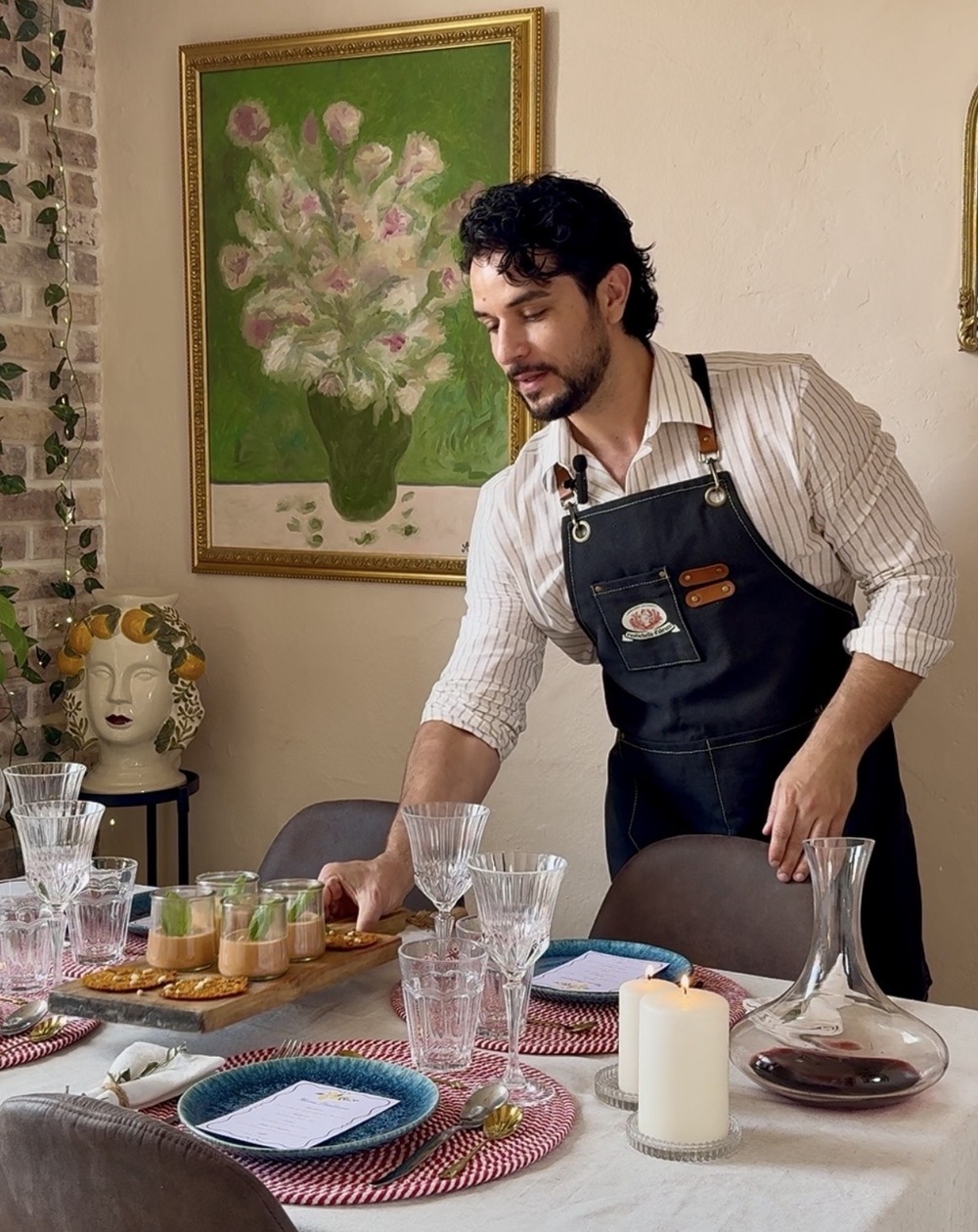
Just before your guests arrive, ask yourself one question: am I ready to enjoy this moment with them, or am I still completely caught up in making everything happen?
This distinction pretty much sums up the Italian approach to hosting. It's not about having every last detail under control, but about preparing enough in advance to make yourself available once your guests arrive.
- I prioritize connection over perfection: what matters most is that my guests feel comfortable.
- I plan ahead: I make time to be fully present throughout the evening.
- I pay attention to the flow of dinner: I guide the evening without trying to control every detail.
- I create the right atmosphere: I make my home feel welcoming rather than staging a scene to impress.
- I keep things in perspective: my guests are here to share a moment, not to judge my hosting skills.
One lesson my Nonna often passed down to me, and one that perfectly captures this philosophy, is to give your undivided attention to the people you're sharing a moment with.
Everything else can wait.
The Art of Italian-Style Hosting in Three Principles
If we had to sum up this approach in just a few words, it would come down to three complementary principles:
Prepare ahead.
Keep things simple.
Make human connection a priority.
Planning ahead takes the pressure off when it's time to welcome your guests. Keeping the preparations and menu simple makes dinner easier to manage. And staying present gives the things that truly matter room to unfold: conversations, laughter, and the pleasure of being together.
It's this balance between preparation and spontaneity that gives dinner its warm, natural feel. Organization certainly plays a part, but it should never take center stage over the moment you're sharing.
FAQ – Frequently Asked Questions
To host an Italian-style dinner, focus on a well-balanced menu, generous dishes, and a welcoming atmosphere. You could start with an antipasto to share, follow it with a pasta course, and finish with a homemade dessert. Beyond the menu itself, what matters most is taking the time to enjoy your guests and create a genuine moment of connection.
The best way to reduce stress is to take care of as much as possible ahead of time: choose your menu, prepare whatever you can in advance, set the table, and plan your drinks. On the day of the dinner, save the final steps for the dishes that genuinely need to be prepared at the last minute. That way, you'll have more time to spend with your guests.
A relaxed Italian-style menu could include focaccia or a few antipasti to share, a pasta dish such as orecchiette with pesto or carbonara, and a tiramisu made ahead of time. Three courses are all you need for a generous meal, as long as you choose recipes that suit the number of guests and the time you have available.
A dinner party with friends works best when everyone feels at ease and the evening flows naturally. Plan a relaxed aperitivo, avoid long waits between courses, and take care of as much of the serving preparation as possible ahead of time. Let the conversations unfold, too. There's no need to fill every moment or constantly keep the evening entertained.
This approach places great importance on sharing, generosity, and the pleasure of being together. A meal is about much more than what's served on the plate: the welcome, the atmosphere, the pace of the evening, and the attention you give your guests all play an essential part in the experience. It's this combination that makes people want to linger and leaves them with lasting memories.
Conclusion — Become The Host They'll Remember
A successful Italian dinner isn't measured by the number of recipes you've prepared, the complexity of the dishes, or how perfect the decorations look. It's better measured by the atmosphere around the table, the conversations that carry on, and the lovely feeling everyone takes home with them.
Throughout this article, we've explored the six pillars of the Art of Italian-style hosting: the host's mindset, planning and timing, menu selection, practical essentials, table setting and atmosphere, and finally, emotion and human connection. Each plays a different role, but together they help create a harmonious dinner.
The right mindset sets the tone, good planning frees up your time, the menu gives the meal its structure, and the right tools make preparation easier. The atmosphere makes guests feel welcome, while the attention you give people and the rhythm of the evening turn an ordinary meal into a genuine moment of connection.
This doesn't mean you need to organize a spectacular dinner every time you invite people over. It's really about finding the right balance between preparation and spontaneity, so everyone can enjoy the evening, including you.
Picture your next dinner party: a menu you know by heart, a welcoming table, most of the preparations already taken care of, and plenty of time to talk with your guests. You no longer need to spend the evening keeping an eye on every little detail. You can finally be part of the moment you've created.
Because what we remember isn't just what we ate, but how welcome we felt.
That's the vision I want to share through Casa Bandera: helping you turn your dinners into warm, memorable Italian experiences, without making the preparations any more complicated than they need to be.
Welcome to the Art of Italian-style hosting. From our Famiglia to yours.
Ready to take things further and learn how to plan and host your dinners with greater ease and confidence? Discover the Positano Masterclass and its method for turning every meal into a genuine moment of connection.
Masterclass & Coaching: Transform Your Dinner Parties | The Positano Method™

Free Guide: 10 Golden Rules for Hosting Italian-Style


Let’s Talk Together!