Select your language

History & Origins of Carbonara: The True Roman Story

Want to uncover the real story behind Carbonara, learn its Roman origins, and understand why it tastes so unique… Where did this recipe really come from? Is it an ancient Roman dish or a more recent invention?

Today, I’m going to show you the authentic story of Carbonara, how it evolved, and why every detail matters to savor the true Roman experience.

The Secret to Real Roman Carbonara That Wows Your Guests
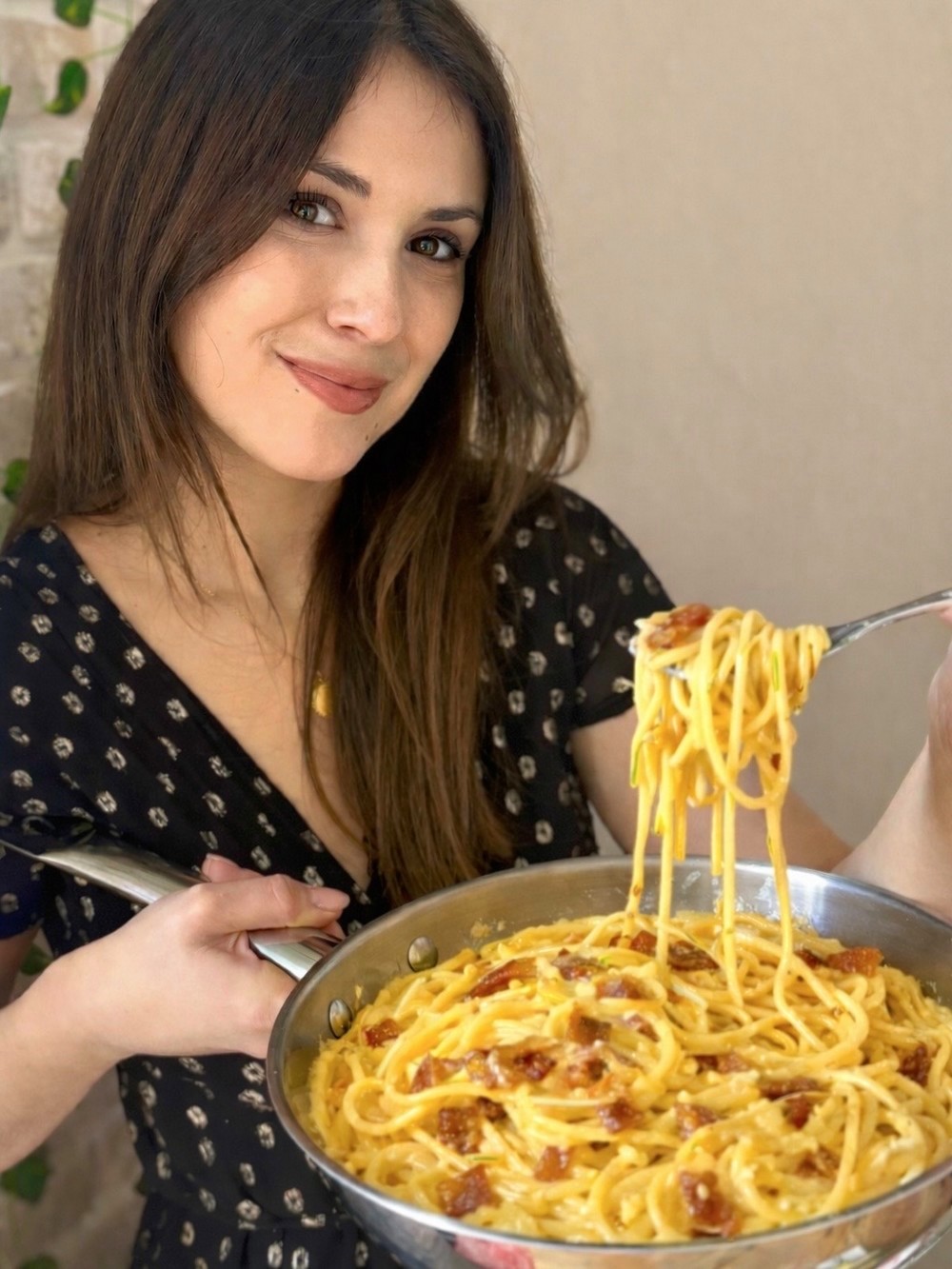
Spaghetti alla Carbonara - Italian Recipe

Master the real Roman recipe with ease
No cream! No bacon!
Exclusive PDF as a free gift

Dinner with traditional Carbonara among friends
"I tasted Carbonara for the first time in my Nonna’s kitchen. Every bite transported me straight to the heart of Rome: melting guanciale, fragrant pecorino, and that almost magical texture.
Today, Carbonara isn’t just a recipe: it’s a culinary legacy, a mix of tradition, improvisation, and love for cooking."

— Casa Bandera, from our Family to Yours

Table of Contents

1. The Uncertain Origins of Carbonara

History of the real Carbonara

Where does Carbonara really come from? Ancient Rome? An old forgotten manuscript? A secret passed down for 2,000 years?

No.

And that’s when the story gets fascinating.

Carbonara’s origin is much more recent than you might think. Historians place its birth around 1944–1945, in a Rome scarred by war, rationing… and ingenuity.

Picture the scene.

Rome is emerging from chaos. Markets are almost empty. Families cook with almost nothing. Then, American soldiers arrive. In their rations: bacon, powdered eggs, canned goods.

And there it is… an unexpected meeting.

Mix constraint with Roman genius… and you get an iconic dish.

Some also talk about the “carbonari,” the charcoal workers from the hills of Lazio. A simple, nourishing, quick dish. Makes sense. Sounds credible. But no written proof before the 1950s.

And that’s what makes it powerful.

True Roman Carbonara isn’t an ancient legacy. It’s a modern creation turned tradition.

At Casa Bandera, I love telling this to guests. You see their eyes light up. They realize Carbonara’s story isn’t about an empire. It’s about resilience. Creativity. A people turning simplicity into a masterpiece.

Looking for authenticity? Here it is.

Not in a myth. In 1940s Rome. In a tiny kitchen. In an improvised gesture that became legend.

And tell me… doesn’t that make Carbonara even more beautiful?


2. Why the Name “Carbonara”? A Still-Burning Mystery

History of real Roman Carbonara

Why “Carbonara”? Why this word that sounds dark, almost mysterious?

Literally translated, it comes from “carbon,” meaning coal.

First theory: the carbonari, the charcoal workers of Lazio. Men covered in soot. Long days. Fire always burning.

They supposedly cooked simple, hearty pasta dishes. Robust. Straightforward. No frills. A Carbonara ahead of its time? Maybe.

But here’s the twist.

No written trace of the recipe before the 1950s. Not in 19th-century Roman cookbooks. Not in classical culinary archives.

Legend or romantic reconstruction?

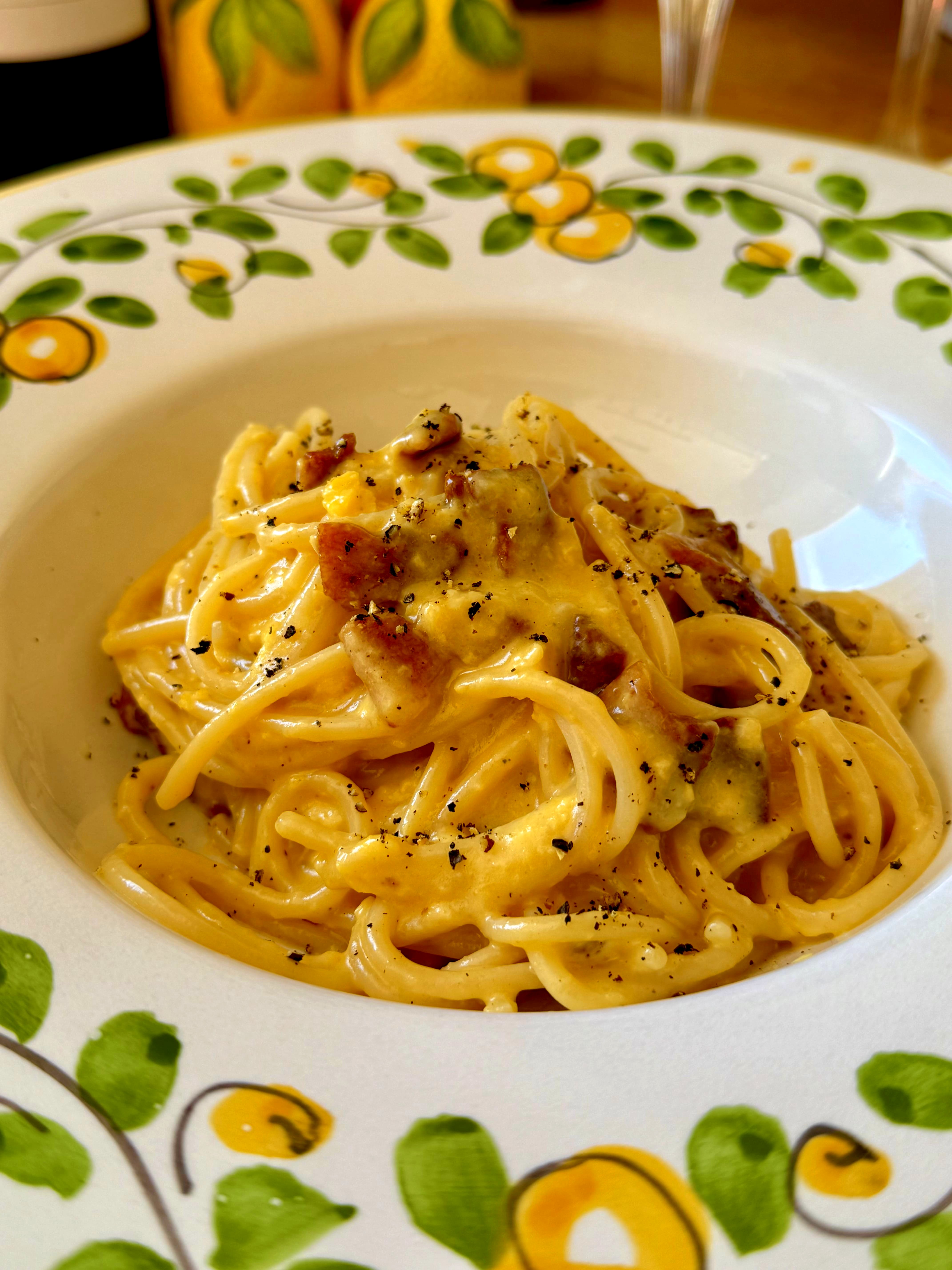
Second theory: black pepper. Look at a real Roman Carbonara. Those generous black specks on the golden sauce.

It looks like coal dust.

Simple. Visual. Logical.

Modern theory: the name appeared after the war, to give this new Roman dish a strong identity. A word that feels popular. Urban. Authentic.

If the dish was born in 1945 Rome… its name had to tell a powerful story.

At Casa Bandera, I love asking at the table: “Do you think it comes from the charcoal workers or the American soldiers?”

Silence. Smiles. Debate.

And that’s the magic.

Because Carbonara’s story isn’t fixed in a myth. It lives. It evolves. It intrigues.

What about you? A recipe 2,000 years old… or a dish born from chaos, becoming a symbol of Rome in less than 80 years?

Personally, I pick the latter.

Because it’s human. Imperfect. Real.

And that’s exactly what makes Carbonara so powerful today.


3. Carbonara and Rome: A Dish That Became a Symbol

Restaurant in Rome: Carbonara

Carbonara was born in Rome. But more than that—it belongs to Rome.

Not all of Italy. Not some vague region. Rome.

By the 1950s, the dish started appearing in black and white on trattoria menus across the city. That’s when the story really begins. Officially. Concretely.

Before that? Nothing.

And it’s fascinating.

Picture Trastevere. Narrow cobbled streets. Half-open shutters. A tiny room with 20 seats at most.

A waiter shouts an order. A pan sings. The plate arrives. Steaming. Glorious.

Carbonara then becomes the ultimate urban dish.

  • Quick to make
  • Hearty and energizing
  • Accessible
  • Deeply Roman

Office workers eat it at lunch. Families share it on Sundays. Students order it at night, broke but happy.

If one dish could represent post-war Rome… this would be it.

At Casa Bandera, I often tell this story: the first time I had carbonara in Rome. Not in a fancy restaurant. No. In a noisy trattoria, stained tablecloths, impatient waiter.

But that plate…

Silence at the table. Shared glance. A quiet “mamma mia.”

Real Roman carbonara doesn’t try to impress. It comforts. It brings people together.

And that’s why it became a symbol.

Not because it’s complicated. Not because it’s luxurious. But because it tells the story of Rome.

A city intense. Direct. Warm. A little chaotic. Terribly alive.

So let me ask you a question.

When you eat carbonara, are you eating pasta… or tasting a piece of Roman history?

The difference changes everything.

Avoid Tourist Traps in Rome

2026 Rome Food Tour Guide

Our 10 best tried & tested spots
Get our PDF guide as a free gift

4. The Global Explosion… and Carbonara’s Twists

Ingredients of Real Roman Carbonara

In the 1970s, carbonara left Rome.

It crossed Italy. Then Europe. Then the Atlantic.

And then… everything changed.

Italian restaurants popped up in New York, Paris, London. “Spaghetti carbonara” became a staple on international menus. Easy to pronounce. Easy to sell. Easy to love.

But the more a dish travels, the more it transforms.

Enter heavy cream. Then onions. Sometimes mushrooms. Sometimes even… chicken.

Yes. Chicken.

Is this still real Roman carbonara? Or a modern adaptation?

Let’s be clear. I’m not judging. Food evolves. It adapts. It mingles. That’s normal.

But let’s be honest.

The original carbonara recipe, born in Rome in the 1940s-50s, contains no cream.

Zero.

So why did this creamy version conquer the world?

  • Easier to stabilize
  • Less technical
  • More comforting for non-Italian palates

Add cream, and you secure the texture. But you change the story.

At Casa Bandera, I had a nearly comical moment: a friend proudly told me “I make an amazing carbonara with cream and smoked bacon.”

I smiled.

I told him the origin of carbonara. Rome. 1945. Resourcefulness. Emulsion. Simplicity.

Silence.

“Ah… so it’s not the real recipe?”

Not exactly.

And this is where positioning matters.

You can love modern versions. Of course. But if you want authenticity, if you want to understand carbonara’s history, you must go back to Rome.

Because a dish is not just a list of ingredients.

It’s identity. Memory. A precise context.

International carbonara is popular. Roman carbonara is cultural.

And you… do you want to travel by plane, or travel back in time?

The difference is subtle.

But it changes everything.

Read also: The Ingredients of Pasta Carbonara in the Real Italian Recipe


5. Carbonara Today: More Than a Recipe, a Living Heritage

The story of true Carbonara

Why does Carbonara spark so much debate in Italy?

Why can a simple pasta dish trigger passionate, almost political arguments in Rome?

Because you don’t touch someone’s identity.

Today, Carbonara isn’t just a Roman recipe born in the 1940s. It’s a cultural symbol. A badge of belonging. A little flag on a plate.

In Rome, order a Carbonara with cream… and watch the looks around you.

Not angry. But telling.

The real Roman Carbonara has become culinary heritage.

  • Passed down through generations
  • Defended by Roman chefs
  • Claimed as an official specialty of the city

It’s one of those dishes that tells a story of a specific time: post-war, reconstruction, creativity born from scarcity.

And that is no small thing.

At Casa Bandera, I see it every dinner. When I tell the story of Carbonara. When I explain why it was born in Rome, not anywhere else.

Something happens.

People don’t just listen to a recipe. They listen to a story.

And when you understand the story… you cook differently.

You respect it more. You measure differently. You tell your own story in return.

Carbonara became living heritage because it keeps evolving while staying true to its soul.

Yes, it travels. Yes, it adapts sometimes. But in Rome, it stays faithful to its DNA.

And maybe that’s the real lesson.

A dish doesn’t need 2,000 years to be authentic. It needs meaning.

Carbonara has it.

So next time you make it, ask yourself:

Am I just cooking pasta… or am I carrying forward a piece of Roman history?

If you choose the second option, you’re no longer cooking just to feed.

You’re cooking to pass something on.

And that… is deeply Italian.

Read also: Spaghetti Carbonara: 10 Mistakes to Avoid!


Conclusion: Understanding Carbonara’s Story is Respecting It

Origins of true Carbonara

So, what is the true story of Carbonara?

Not an ancient myth. Not a forgotten medieval recipe. But a dish born in Rome around 1945, in a time of scarcity… and culinary genius.

Carbonara is the product of a precise moment: war, rationing, the arrival of American soldiers, and Roman creativity.

Understanding Carbonara’s origin is understanding Rome.

A proud city. Bold. Warm. Capable of turning a few simple ingredients into a global symbol.

Yes, Carbonara has traveled. Yes, it has been modified. Yes, it adapted to tastes worldwide.

But if you want to taste the real Roman Carbonara—the one that tells its era—you need to return to its story.

Because a dish without context is just a recipe. A dish with a story becomes an experience.

At Casa Bandera, that’s exactly what I aim to share.

Not just a technique. Not just a list of ingredients. But memory. Emotion. A trattoria scene in Trastevere. A steaming plate on a wooden table.

If you know the story… you cook differently.

  • You respect its Roman roots
  • You understand why it was born in the 1940s
  • You grasp why it became an Italian cultural symbol

And above all, you tell your own story in return.

So next time someone asks: “Where does Carbonara come from?”

You don’t just say “Italy.”

You speak of Rome. Of 1945. Of coal miners, maybe. Of American soldiers, surely. Of creativity born from scarcity.

And then, when you serve the plate…

You’re not just sharing pasta.

You’re sharing a piece of Roman history.

And that… is infinitely more delicious.

Read also: The True Italian Carbonara Recipe: Easy, Traditional & Cream-Free


The Secret to Real Carbonara!

Authentic Italian Carbonara Recipe

The Secret to Real Carbonara That Wows Your Guests

Master the real Roman recipe with ease
No cream! No bacon!
Exclusive PDF as a free gift

Let’s talk cucina together!

The Secret to Real Roman Carbonara That Wows Your Guests

Spaghetti alla Carbonara - Italian Recipe

Master the real Roman recipe with ease
No cream! No bacon!
Exclusive PDF as a free gift

Casa Bandera — Italian family heritage and authentic recipes

Casa Bandera

From Our Famiglia to Yours.

Our family-friendly Italian recipes
make it easy for you to impress without stress.

Discover our Dolce Vita

Food Tour in Rome 2026

Avoid Tourist Traps in Rome

Our 10 best tried & tested spots
Get our PDF guide as a free gift

Authentic and Easy Italian Recipes

Turn Your Dinners into Dolce Vita!

4 easy recipes for an unforgettable Italian experience with your guests
Ragù Bolognese • Focaccia •
Trofie al Pesto • Amaretto Tiramisu

Homemade Neapolitan Pizza

5 Mistakes That Ruin Your Homemade Neapolitan Pizza

The mistakes 90% of home cooks overlook
The secret to a soft, airy crust & perfect baking

The Art of Italian Hosting

10 Golden Rules for Hosting Italian-Style with Ease
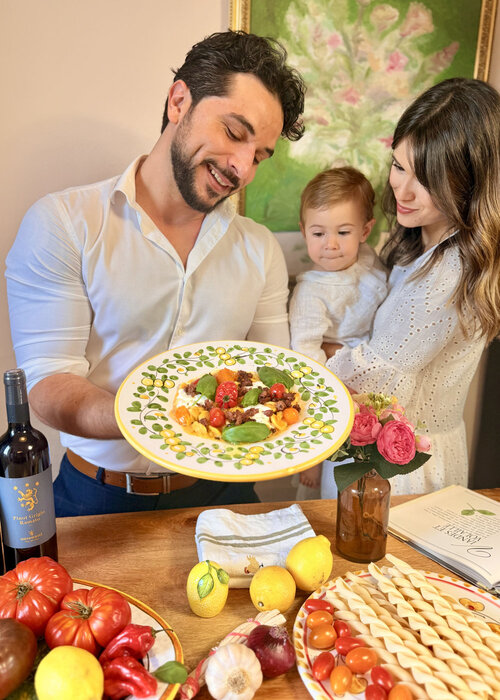
Essentials for a cozy atmosphere at home
Turn your meals into unforgettable Italian experiences

Authentic Italian Carbonara Recipe

The Secret to Real Carbonara That Wows Your Guests

Master the real Roman recipe with ease
No cream! No bacon!
Exclusive PDF as a free gift

Casa Bandera logo
Coat of Arms of the Bandera Family
Cookies user preferences
We use cookies to ensure you to get the best experience on our website. If you decline the use of cookies, this website may not function as expected.
Accept all cookies
Allow only necessary cookies
Read more
Functional
Tools used to give you more features when navigating on the website, this can include social sharing.
Engagebox
Accept
Decline
Analytics
Tools used to analyze the data to measure the effectiveness of a website and to understand how it works.
Google Analytics
Accept
Decline
Wishlist
Shop Wishlist
Accept
Decline
Marketing
Set of techniques which have for object the commercial strategy and in particular the market study.
Facebook
Accept
Decline
Save