 EN
 IT
 FR


Hosting guests calls for a little planning, but also a certain sense of balance. You may have prepared a delicious meal, set a beautiful table and thought through every last detail, yet the evening doesn't always unfold quite as you imagined. The atmosphere takes time to settle, you spend more time in the kitchen than with your guests, and the courses arrive without any real sense of rhythm. By the end of the evening, you feel as though you've put in a great deal of effort without having fully enjoyed the moment yourself.
These situations are more common than you might think. And they aren't necessarily the result of a lack of cooking skills or experience. More often than not, a few habits we rarely stop to question are enough to make hosting a dinner party more complicated than it needs to be. Some even seem like good ideas at first: planning too many dishes, wanting to prepare everything at the last minute or going overboard with little touches to make your guests feel special.
Now imagine an evening when you can welcome your guests with ease, take the time to talk and enjoy the meal alongside them. The table is ready, everything is under control in the kitchen, and each course arrives at just the right moment. Nothing feels rushed, nobody is left waiting too long, and you don't have to disappear into the kitchen every ten minutes. It's this sense of effortless flow that makes a dinner party truly enjoyable.
Getting there isn't about doing more. It's about recognizing what makes things unnecessarily complicated. In this article, we'll look at the ten most common mistakes people make when hosting at home, along with a few habits you can adopt to avoid them. Because the Italian Art of hosting isn't about elaborate planning or complicated dishes. It's about a series of thoughtful choices that leave room for what really matters: the pleasure of being together.
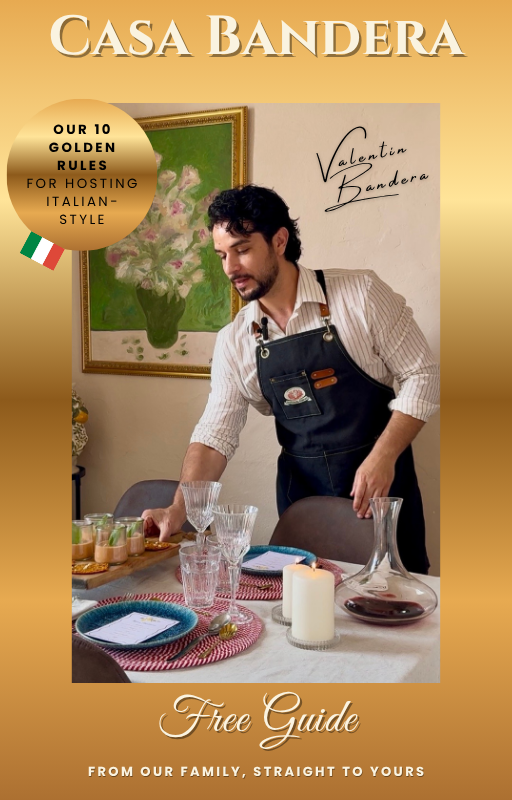
Free Guide: 10 Golden Rules for Hosting Italian-Style

“In Italy, I came to understand something simple: the best dinners aren't necessarily the most elaborate. They're the ones where everything feels natural, conversations unfold at their own pace, and everyone makes the most of being together. But behind that effortless feeling lies a genuine Art.”
— Casa Bandera, from our Famiglia to yours
Table of Contents
Why You Make These Mistakes without Realizing It
Some dinner parties seem to come together effortlessly, while others require an enormous amount of energy from the host. Yet the difference doesn't always come down to the quality of the food, the budget or the host's experience. More often, it lies in the details you don't immediately notice: how the evening is planned, the menu you choose, the flow of the courses or simply how available you are to your guests.
The Italian way of hosting is all about finding the right balance between planning, atmosphere and presence. An overly ambitious menu can leave you spending the entire evening at the stove. Poorly timed courses can interrupt conversations, while a lack of preparation can turn the final minutes before your guests arrive into a frantic race against the clock. Each of these little problems may seem harmless on its own. But together, they can take a toll on everyone's experience.
What's interesting is that these mistakes are often made with the best of intentions. You want to make people happy, impress them or serve a meal they'll remember. But hospitality isn't measured by the number of courses you serve or the hours you spend preparing everything. It's also about creating a welcoming setting where everyone feels comfortable and where you, as the host, can enjoy the evening too.
That's what we'll explore through these ten common mistakes. Some are directly related to the meal, others to planning or atmosphere. But they all have one thing in common: a few simple adjustments can help you avoid them.
Mistake #1: Trying to Do Too Much

When you're hosting, it's tempting to keep adding dishes to create a generous meal. You picture several antipasti, a pasta course, a meat dish, different sides and, of course, a homemade dessert. The intention is lovely: you want your guests to enjoy plenty of delicious food and feel especially welcome. But an overly ambitious menu can quickly become the biggest obstacle to a successful evening.
I experienced this myself when I first started hosting. The more I tried to offer, the more preparations I ended up juggling, with several dishes cooking at once and courses that didn't always make it to the table in the best possible condition. The result was often rather ironic: I'd spent hours cooking, yet barely had any time to enjoy my guests. And even when the meal was abundant, that didn't necessarily make it more memorable.
A more thoughtful approach is to build a well-balanced menu around a few carefully chosen dishes. A shared antipasto, a delicious main course and dessert can be more than enough. You can also serve a generous aperitivo or a few sides, as long as they don't turn meal preparation into a full-blown marathon.
The idea isn't to reduce the number of courses at all costs, but to choose dishes you can prepare and serve without feeling overwhelmed. It's better to offer three wonderful things, made with care, than six dishes that keep you running around all evening. Generosity isn't measured by how much food fills the plate. It's also felt in the quality of the time you share.
Mistake #2: Failing to Plan Ahead
The stress of hosting a dinner party rarely begins when your guests walk through the door. It usually starts taking shape hours earlier, when the grocery shopping isn't finished, some of the preparations are still waiting to be done and the menu hasn't really been planned out. An untested recipe, a forgotten ingredient or a table that still needs setting can be enough to throw the entire end of your day off balance.
Mae often says, “A good dinner starts in the afternoon… not at 8 p.m.” It's a simple remark that captures the value of planning ahead. By taking care of everything you can in advance, you avoid piling all the tasks onto the very moment your guests arrive. You can set the table at your own pace, prep the ingredients, chill the drinks and organize the different stages of the meal in a logical order.
Of course, there's no need to cook everything hours ahead of time. Some dishes are actually better when prepared at the last minute. What matters is knowing the difference between what you can get done in advance and what genuinely needs your attention when it's time to serve. A sauce made the day before, vegetables already washed and chopped or a dessert ready to serve are all little tasks you won't have to worry about once the evening gets underway.
This kind of planning also changes your mindset. Instead of constantly checking the time and thinking about the next thing you need to prepare, you can welcome your guests with a much more relaxed and attentive presence. And that sense of calm is immediately noticeable: a relaxed host often contributes far more to a wonderful dinner than an especially elaborate menu ever could.
Mistake #3: Getting The Timing Wrong

A successful dinner party isn't simply a succession of well-prepared dishes. It has its own rhythm, too. Aperitivo gives guests time to arrive, reconnect and ease into conversation. The meal then takes over naturally, without the courses coming too quickly or long pauses bringing the evening to a standstill.
Serving too quickly can make it seem as though you're trying to rush the meal, just as your guests are beginning to enjoy their drinks or first course. On the other hand, leaving too much time between courses, without any transition or explanation, can cause the energy around the table to fade. Good timing isn't about sticking to a rigid schedule. It's about paying attention to the pace of the meal and the people sharing it.
I particularly remember a dinner at some friends' home in Modena. There was nothing extraordinary about the food, and yet I came away with a wonderful memory of the evening. Each stage unfolded at just the right moment: aperitivo got the conversations going, the starter was light, and the pasta course found its natural place in the flow of the meal. Nobody seemed in a hurry, but nobody felt left waiting either.
That's precisely the balance you're looking for. Having a general plan for the evening helps you avoid last-minute surprises, but you also need to know when to adapt. If the conversations are flowing, there's no need to rush the next course. If everyone is ready to sit down, there's no reason to keep them waiting. A good host keeps an eye on how the meal is unfolding without making it seem as though they're constantly watching the clock.
When the timing is right, transitions become almost invisible. Your guests can focus on the conversations, the food and the pleasure of being together, while you still have enough freedom to enjoy the evening yourself.
Mistake #4: Leaving Everything Until The Last Minute
There's a situation many hosts will recognize: your guests are settled in the living room, conversations are underway, but you're still spending most of your time in the kitchen. You can hear laughter from the next room, occasionally call back an answer to a question and pop in for a few moments before heading off again to check on something cooking. Meanwhile, your partner or the other people there are left to keep the evening going. You organized this dinner to spend time with everyone, yet you may end up missing much of it yourself.
The problem isn't necessarily cooking while your guests are there. Some dishes are best finished at the last minute, and watching fresh pasta being cooked or a dish coming together can even be part of the pleasure. The trouble starts when all the important steps are still waiting to be done: making a sauce, chopping ingredients, plating the food or finishing dessert. At that point, you're no longer enjoying the evening; you're simply putting out fires.
The solution is to plan the meal so that last-minute work comes down to just a few essential finishing touches. A sauce can be made ahead and simply reheated, ingredients can be washed and chopped, and dessert can wait in the fridge until it's time to serve. With a pasta dish, all you often need is a clear plan for the cooking time and the final steps.
By taking care of these tasks in advance, you give yourself the freedom to sit down with your guests without feeling as though you have to leave them every few minutes. A good dinner doesn't require everything to be finished before your guests arrive. It simply means knowing exactly what still needs to be done. The goal is straightforward: to still be present when the evening really begins.
Mistake #5: Overlooking The Atmosphere

A meal can be perfectly prepared and still leave a rather ordinary impression. Sometimes, the reason has less to do with what's on the plate than with everything around it. Harsh overhead lighting, an uninviting room or music that's missing, too loud or simply not quite right can make the atmosphere feel less welcoming. On the other hand, a few small adjustments are often all it takes to turn a familiar dining room into a place where everyone wants to linger.
I remember a dinner in Bologna at a friend's Nonna's house. What stayed with me wasn't just the food, but the atmosphere of the home: warm lighting, a few candles and Italian music playing softly in the background, subtle enough to let the conversations take center stage. Nothing felt particularly staged, and that was exactly what made the evening so enjoyable. You felt at home from the very first moments.
To recreate that feeling in your own home, start with the lighting. If possible, avoid harsh, direct light shining down over the table. A side lamp, a few candles or a string of warm lights can create a much softer atmosphere. Music deserves the same attention: a playlist that suits the occasion, played at a low volume, can accompany the evening without becoming the center of attention.
Finally, think about the overall feel of the room. A few flowers, seasonal branches or simply a beautifully set table can provide the finishing touch. There's no need to fill your space with accessories or completely transform your home. A lovely atmosphere isn't always something you notice right away. You feel it in the way guests settle in, enjoy their conversations and happily linger over the meal.
Free Guide: 10 Golden Rules for Hosting Italian-Style
Mistake #6: Underestimating The Art of The Table
The table is often the first thing your guests notice as they take their seats. Before they even taste the food, they already get a sense of the thought you've put into the evening through your choice of plates, glasses, linens, and decorative touches. Yet when preparing a dinner party, table setting can easily take a back seat to grocery shopping and cooking. You lay out the silverware, set out the plates, and consider the job done.
And yet, it only takes a few minutes to give your table more character. Mae particularly enjoys this part and usually takes around ten minutes to add the finishing touches. A tablecloth or a beautiful runner, cloth napkins, and a few seasonal flowers or branches can be all it takes to create a harmonious setting. The choice of materials and colors matters far more than the number of decorative pieces: linen, ceramic, glass, and wood naturally bring texture and warmth to the table.
The key is to keep things simple. An overcrowded table can get in the way of conversation, leave little room for sharing dishes, and make serving more complicated. By contrast, a thoughtfully arranged table with enough space for everyone immediately feels more welcoming. You don't need to bring out your finest dinnerware for every occasion. A few carefully chosen pieces, even if they don't match, can add plenty of personality.
It's often these subtle touches that leave a lasting impression on your guests. They may not be able to explain exactly why they love the table, but they'll sense the care you've put into welcoming them. That's the beauty of the Art of the table: creating an inviting setting that complements the meal without ever stealing the spotlight.
Mistake #7: Serving without Telling a Story

A dish can be delicious, but knowing the story behind it can make it even more special. A family recipe passed down through generations, an ingredient brought home from a trip, or a dish connected to a cherished memory can add a depth to the meal that the taste alone cannot always convey. This isn't about turning every course into a formal food presentation. It's simply about sharing, when the moment feels right, what makes a particular dish special to you.
I remember a summer evening when a family prepared a simple pasta dish with tomato sauce and basil. Before serving, the father took a moment to explain that the recipe came from his mother and that both the tomatoes and basil had been grown in their own garden. It wasn't a rehearsed speech or a lengthy explanation, just a few words about where the dish came from. But once we sat down to eat, we weren't simply enjoying a plate of pasta anymore. We were also discovering a little piece of that family's story.
You can do the same in the simplest way. Tell your guests why you chose the recipe, where a particular ingredient comes from, or share a memory connected to preparing it. If you're serving a regional specialty, a few words about its origins can also spark your guests' curiosity. And if the dish is a family recipe, it's often the perfect opportunity to pass along a little anecdote or tradition.
Just remember to leave room for the meal and the conversation. A short story, naturally shared as you serve, is more than enough. The idea isn't to impress your guests with your culinary knowledge, but to create a connection between what they're tasting and what you'd like to share. Sometimes, that little bit of storytelling is what makes a dinner feel more personal and memorable.
Mistake #8: Being Stressed and Absent
You can have chosen a wonderful menu, planned your preparations ahead of time, and set a beautiful table. But if you spend the entire evening checking cooking times, keeping an eye on the service, and rushing from one room to another, something will be missing. Your guests are there to spend time with you, not just to enjoy a well-organized meal. And when the host is constantly worrying about how the evening is unfolding, they're less available to their guests, and the atmosphere can suffer.
I remember a dinner in Milan where, on paper, everything seemed perfectly organized. The meal was delicious, the table was beautifully set, and the ingredients were top quality. Yet the host spent almost the entire evening in the kitchen, making sure every little detail was under control. The guests were enjoying their meal, but something was missing: that sense of presence that makes a dinner feel warm and welcoming. It was a pleasant evening, but it never quite became a true moment of connection.
Of course, it's perfectly normal to step away for a few moments to finish a dish or bring something to the table. The goal isn't to create an evening that runs perfectly, without a single unexpected moment. It's about accepting that not everything has to be absolutely perfect and not letting the little details take over. If a dish needs a few extra minutes or something doesn't go quite as planned, that's rarely what your guests will remember.
Take the time to sit down, join the conversation, and enjoy the meal you've prepared. If you're hosting with someone else, divide up a few tasks ahead of time rather than taking everything on yourself. Above all, remember that your presence is part of the welcome. A host who is relaxed, attentive, and available often contributes far more to a successful evening than a flawless plan ever could.
Mistake #9: Trying to Impress Instead of Share

When you invite people over, it's only natural to want to make them happy and offer them something special. But sometimes, that desire can turn into real pressure: choosing a particularly elaborate recipe, perfecting every detail of the presentation, planning an ambitious menu, and trying to make the evening flawless. Little by little, the pleasure of hosting gives way to a kind of performance. You're no longer simply preparing dinner for your guests; you're trying to prove that you know how to host.
The paradox is that this desire to impress can actually take you further away from what makes a meal memorable. When you're so focused on the end result, you risk losing sight of the people around the table. A complicated recipe demands more of your attention, an overly elaborate presentation can make serving feel less natural, and constantly chasing perfection eventually wears you out. Your guests may appreciate the effort, but that doesn't necessarily mean they've had a better evening.
Mae often says, "The best dinners never try too hard to impress." It's a lovely reminder that generosity and authenticity matter far more than putting on a show. A family dish prepared with care, a good bottle of wine opened at just the right moment, or a few antipasti arranged in the middle of the table can create a much warmer atmosphere than a meal designed as a succession of culinary showpieces.
Before trying to wow your guests, ask yourself what would genuinely make them happy and what would allow you to enjoy the evening, too. Choose a menu you know well, keep the presentation thoughtful but natural, and focus on gestures that mean something. Elegance doesn't necessarily come from sophistication. More often, it comes from making the right choices and offering a sincere welcome.
Mistake #10: Failing to Create a Connection
You may have prepared a beautiful table, chosen an excellent Italian wine, and spent hours in the kitchen putting together a delicious meal. Yet if everyone stays focused on their own plate and the conversation never really gets going, something may still be missing. Because dinner is about much more than what we eat. It's also an opportunity to reconnect, catch up, and share a moment we might not otherwise have made time for.
In Bologna, I was often struck by how meals could stretch on well into the evening. Of course, people took their time eating, but above all, they took their time talking. Conversations moved from one subject to another, stories would sometimes come back around, and no one seemed particularly eager to bring the meal to an end. What mattered wasn't sticking to a schedule, but enjoying each other's company.
To encourage these moments, there's no need to plan activities or constantly look for ways to keep the conversation going. You can simply show an interest in your guests, ask open-ended questions, pick up on an anecdote, or give someone the time to tell a story. And above all, allow for moments of silence. A good conversation doesn't need to be kept going every second. What matters is that everyone feels comfortable finding their place around the table.
The meal then becomes much more than a moment centered on food. It turns into a space for sharing, where generations, experiences, and personalities come together. It's often this genuine sense of connection that makes people want to linger, pour another glass, or stay a little longer after dessert. And when your guests leave feeling they've truly shared something with you, dinner has done exactly what it was meant to do.
FAQ – Frequently Asked Questions
The most common mistakes include planning an overly ambitious menu, failing to prepare ahead of time, or spending too much time in the kitchen during dinner. It's also important not to overlook the atmosphere, the pace of the meal, and the host's availability. A successful evening comes down to thoughtful planning and an atmosphere where everyone feels comfortable.
A dinner party can lose its natural flow when several things haven't been properly planned: last-minute preparations, courses served too quickly or too slowly, or a host who's constantly busy in the kitchen. These little imbalances can disrupt the evening and limit interaction between guests. Allowing for a flexible plan makes it easier to enjoy the moment.
Start by choosing a menu you're comfortable preparing and identifying which tasks can be done ahead of time. Set the table before your guests arrive, prepare your ingredients, and plan the different stages of serving. By keeping last-minute tasks to a minimum, you'll have more time to welcome your guests and enjoy the meal with them.
Not necessarily. An elaborate meal can be enjoyable, but it's certainly not essential to hosting a successful dinner party. A well-chosen menu, quality ingredients, a warm atmosphere, and genuine attention to your guests often matter much more. The goal is to share a wonderful moment, not turn the evening into a culinary showcase.
One of the biggest mistakes is focusing exclusively on the food and forgetting about the overall experience. Cooking matters, but it's not enough on its own. Planning, atmosphere, the pace of service, and the quality of the conversations all contribute just as much to the memories your guests will take home.
Conclusion: Becoming The Host They'll Remember

From the outside, hosting the Italian way can look effortless. A generous meal, a beautiful table, a few glasses of wine, and conversations that carry on long into the evening… Yet that sense of natural ease often comes from a series of thoughtful choices. Knowing what to prepare ahead of time, finding the right balance in your menu, creating the right atmosphere, and above all, staying present for your guests: these are the little things that allow an evening to unfold naturally.
Over the years, through my experiences in Bologna, at friends' homes, with Mae, and simply around our own table, I've made several of these mistakes myself. Like many people, I've sometimes tried to do too much, prepare everything too thoroughly, or keep every detail under control to make sure dinner went perfectly. But I've gradually realized that you can spend hours working on a meal without necessarily creating the kind of memory you had hoped for.
What guests remember goes far beyond the recipes or the dishes you serve. They remember the welcome, the conversations, the atmosphere, and that lovely feeling of having been genuinely welcomed. A dinner can be imperfect in its details and still become a wonderful memory, simply because everyone felt they belonged.
If you take away just three principles from this article, let them be these: simplify to stay in control, plan ahead so you can truly enjoy the evening, and be present for your guests. Everything else can adapt to your style, your budget, your menu, and the people you're welcoming into your home. There's no single right way to host, but there is one shared intention: making sure everyone feels at home around your table.
That's how a simple dinner at home can become a truly unforgettable Italian experience. Not because everything was spectacular, but because the moment felt warm, genuine, and deeply human.
And perhaps, as your guests are getting ready to leave, they'll simply say: "We feel so at home here… Can we stay a little longer?" That's often the best sign that you've hosted a wonderful evening.
If you'd like to take things a step further and plan your next dinner parties with greater confidence and peace of mind, I've put together a guide to walk you through the process, step by step:
The 10 Golden Rules of Italian-Style Hosting
Inside, you'll find practical principles and easy-to-follow tips for planning a meal, making your guests feel welcome, and creating a warm, inviting atmosphere. Everything you need to turn your next Italian dinner party into a wonderful moment of sharing, without going overboard.
Because hosting isn't just about giving your guests something to admire. Above all, it's about giving them a reason to come back.
Also read:
The Art of Italian Table Setting: Rules & Elegant Decor Tips
How to Host Guests at Home (Without Stress)
The Art of Italian Hosting: The Complete Guide to Creating Unforgettable Dinner Parties

Free Guide: 10 Golden Rules for Hosting Italian-Style


Let’s Talk Together!