 EN
 FR


Setting a beautiful table for friends or family can sometimes feel more complicated than it seems. You might find yourself wondering which tablecloth to choose, which dinnerware to use, how to arrange the silverware, or what decorative touches to add. You want to create an elegant, welcoming atmosphere without making your dining room feel like a restaurant.
Yet a beautifully set table doesn't necessarily require expensive pieces or elaborate decorations. It comes down to finding the right balance between textures, colors, lighting, and those little details that make people want to sit down and stay awhile. That's precisely what I love about the Italian Art of table setting: the ability to create an atmosphere that feels warm, thoughtful, and effortlessly natural, without ever looking overdone.
Picture your guests walking through the door and discovering a table that's already been set. A lovely tablecloth, a few glasses, understated decorations, and soft lighting are sometimes all it takes to set the mood for the evening. Before the first course is even served, the Art of welcoming has already begun.
In this article, I'll introduce you to the principles of Italian table setting, from choosing the right dinnerware to decorating your table, arranging the silverware, and creating an inviting space that encourages sharing. You'll see that you don't need to fill your table with accessories to make it look elegant. What matters most is choosing the right elements and giving each one room to breathe.
Free Guide: 10 Golden Rules for Hosting Italian-Style
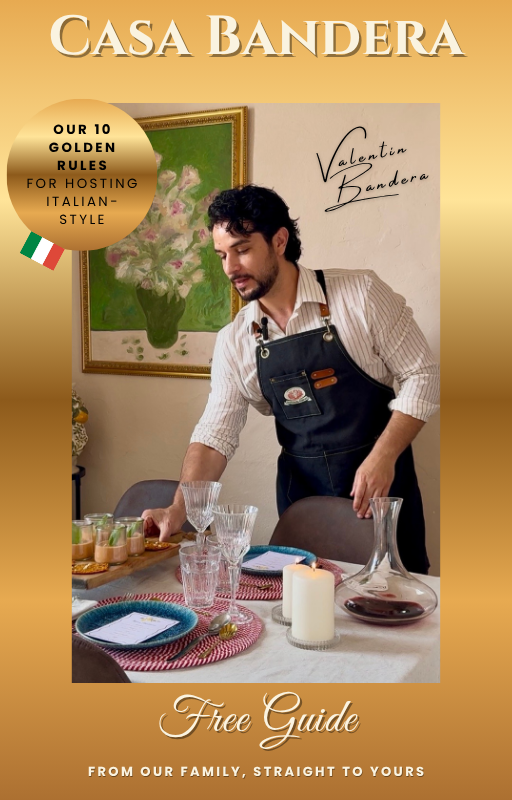

“In Italy, the table was always set before the guests arrived. It didn't need to be elaborate to feel welcoming. It was lively, warm, and thoughtfully prepared. My Nonna had a lovely way of reminding us: a beautiful table already makes you want to stay.”
— Casa Bandera, from our Famiglia to yours
Table of Contents
Why Italian Table Setting Makes All The Difference
Sometimes, a table makes you want to sit down the moment you see it, even if you can't quite explain why. It's not necessarily the quality of the dinnerware, the price of the accessories, or the sophistication of the decor that makes the difference. More often, it's the overall impression: a sense of harmony between the elements, thoughtful attention to your guests, and the comforting feeling that everything has been prepared with them in mind.
In Italy, setting the table is a natural part of hospitality. It's not simply another task to check off before heading into the kitchen. It's a way of preparing for the arrival of family and friends. A freshly laid tablecloth, carefully arranged glasses, and a bottle of wine ready to be shared are already part of the dinner experience. The table becomes the first expression of care your guests receive, showing them that you've taken the time to prepare for their arrival.
I often find myself thinking back to certain family meals in Italy. Mae was looking after Rose, who was running around everywhere, while dinner was slowly coming together. There was nothing particularly elaborate about the table: a linen tablecloth, a few glasses, and an already-opened bottle of red wine. And yet, it had that welcoming atmosphere I've long associated with Italian meals. Nothing looked especially styled, but every element seemed to fall naturally into place.
That's what I believe lies at the heart of Italian table setting. It's not simply about displaying beautiful objects, but about creating a setting where guests feel immediately at ease. A table can be elegant without feeling intimidating, thoughtfully arranged without being rigid, and decorated without losing its simplicity. Above all, it should make people want to share a meal and linger a little longer.
And that's also why preparing your complete Italian dinner menu begins long before the first course arrives: the welcome, the atmosphere, and the pleasure of coming together are already part of the meal.
The Philosophy Behind The Italian Table

In Bologna, my Nonna never talked about setting a perfect table. And yet, there was something special about her family meals: you always wanted to linger a little longer, help yourself to another serving of pasta, or keep the conversation going over a glass of wine. Looking back, I realize that this atmosphere was built around a few simple principles: simplicity, authenticity, and generosity.
Simplicity came through in the choice of tableware and accessories. A cotton or linen tablecloth, plates suited to the meal, a few glasses, and understated decorations were more than enough. Authenticity came from natural materials, everyday objects, and an absence of unnecessary fuss. As for generosity, it went far beyond what was served on the plates. It showed in the way everyone was made to feel welcome, glasses were refilled, and time was taken to enjoy the company of family and friends.
There was something else I often noticed at these gatherings: nobody seemed to be in a hurry to clear the table or move on to the next thing. The table remained the heart of the gathering, even after the meal was over. People talked, shared memories, and let conversations unfold naturally. This is an important part of Italian hospitality: the table isn't just a place to eat. It's a place to live, connect, and share everyday moments.
Ultimately, this philosophy is a wonderful starting point for setting a beautiful table. Rather than trying to impress by piling on accessories, begin with a few quality pieces, bring the textures together, and leave enough room for everyone to enjoy the meal comfortably. True elegance often comes from finding that balance between thoughtful details and effortless simplicity.
The Essentials of an Elegant Italian Table

Setting a beautiful table doesn't require an abundance of accessories or particularly expensive dinnerware. A few thoughtfully chosen pieces are all it takes to create an elegant setting, provided you strike the right balance between textures, colors, and proportions. It's actually one of the lessons I learned from watching my Nonna set the table at her home in Bologna.
The first time I tried setting a table for guests, I had a tendency to overdo it. I added several decorative objects, piled on the accessories, and tried to make every little detail stand out. My Nonna looked at me with a smile before quietly removing a good portion of what I had arranged. Her advice was simple: keep only what matters and let each element find its place.
The first decision naturally concerns the table itself. A linen or cotton tablecloth immediately brings softness and a touch of elegance to the setting. Natural fabrics, with their subtly irregular textures, create a warm, inviting look that feels particularly suited to the spirit of Italian dining. If you have a beautiful wooden table, you can also choose to leave it uncovered. It will add character to the overall setting without the need for any additional decoration.
When it comes to dinnerware, choose plates that complement the atmosphere you want to create. White or ivory designs provide a timeless foundation, while handcrafted plates or colorful patterns can bring more personality to the table. In Italy, you'll find everything from understated table settings to wonderfully colorful ones, particularly in the South. What matters most is maintaining a sense of harmony between your plates, table linens, and other decorative elements.
Cloth napkins are another lovely finishing touch. White is always a safe choice, but you can also opt for shades of beige, olive green, or terracotta to introduce a little color. A simply folded napkin placed on the plate or beside the silverware is usually all you need. There's no reason to master elaborate folds: a thoughtful, natural presentation will often look far more elegant.
Finally, remember to leave enough room for your guests. Everyone should have plenty of space for their plates, glasses, and silverware without feeling crowded. You'll also want to account for the dishes, bottles, and serving platters that may arrive throughout the meal, especially when food is meant to be shared. A beautifully set table isn't just pleasing to look at; it should remain practical and comfortable throughout the evening.
How to Arrange Silverware, Glasses, and Napkins

Once you've chosen your tablecloth and dinnerware, it's time to arrange the individual place settings. The goal is simple: make it easy for everyone to sit down and enjoy the meal without having to wonder which glass to use or which piece of silverware to reach for. A well-planned table should be both beautiful and functional, without feeling overly formal.
For a traditional meal, the arrangement is fairly straightforward. Place the fork to the left of the dinner plate and the knife to the right, with the blade facing inward toward the plate. If you're serving soup, place the spoon to the right of the knife. When several pieces of silverware are needed, they are generally arranged in the order they'll be used, with the utensils for the first course on the outside.
Glasses naturally belong in the upper right-hand area of the place setting, above the knives. You can include a water glass and a wine glass, adjusting their arrangement to suit the shape and size of your table. A champagne flute is only necessary if you plan to serve champagne. There's no need to crowd the table with glasses nobody will use.
Napkins deserve a little attention, too. A cloth napkin, simply folded and placed on the dinner plate or to the left of the forks, adds an elegant finishing touch. It can pick up a color from the tablecloth or decorations, or remain understated to let the dinnerware take center stage. Above all, make sure it's easy to reach and comfortable to use.
I particularly remember a dinner with friends in Modena where the table setting was especially well done. Nothing felt complicated, yet every place setting was in order and everyone had plenty of room. Nobody needed to ask where to put their glass or which utensil to use. That kind of simplicity makes a real difference to the comfort of your guests. When a table is thoughtfully arranged, everyone can quickly forget about the details and focus on what really matters: the pleasure of sharing a meal together.
Free Guide: 10 Golden Rules for Hosting Italian-Style
The Art of Italian Table Decor
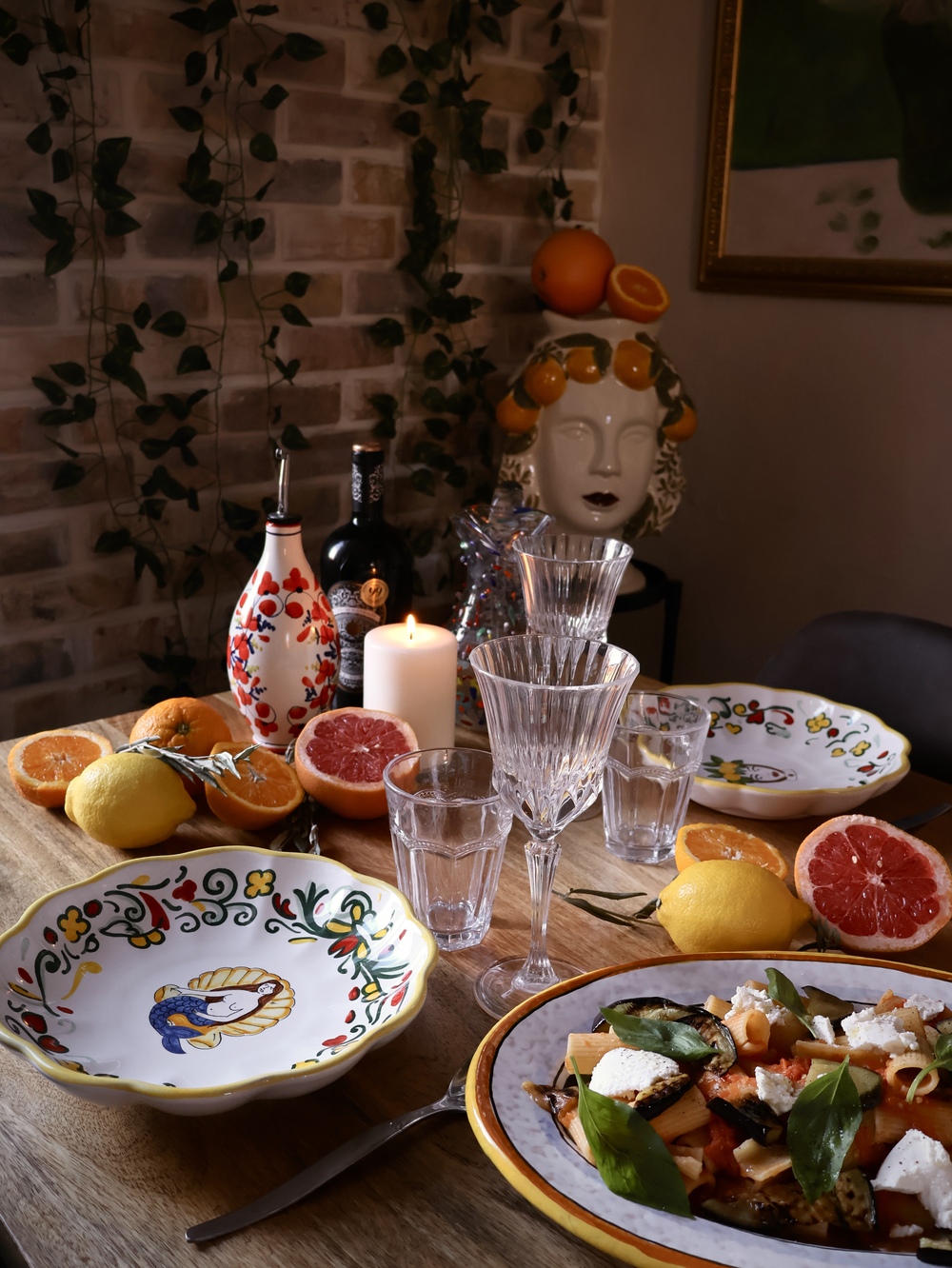
Decor plays an important role in setting the mood around the table, but it should never take center stage over the meal or your guests. What I particularly love about Italian table settings is their effortless simplicity: a few fresh flowers, seasonal fruit, a beautiful tablecloth, and soft lighting are often all it takes to create a harmonious setting. This Mediterranean inspiration is reflected in the colors and materials, with natural elements taking pride of place.
I remember the tables at my Nonna's house, where every decorative detail always seemed to find its place naturally. She never tried to impress anyone with an abundance of accessories. A small bouquet of flowers, a few lemons arranged down the center of the table, and sometimes a couple of basil leaves brought just the right amount of color and freshness. These little touches also felt wonderfully alive, evoking the garden, the kitchen, and the ingredients that would soon find their way onto our plates.
Citrus fruits, in particular, make a wonderful starting point for Italian-inspired table decor. A few bright yellow lemons, perhaps paired with small oranges or leafy branches, instantly bring a Mediterranean feel to the table. You can arrange them in a ceramic bowl, combine them with a bouquet of flowers, or simply leave them as they are in the center of the table. For a greener, more botanical look, a few olive branches or fresh basil leaves can complete the arrangement beautifully.
Lighting deserves just as much attention as the decorative elements themselves. As evening falls, candles create a soft, welcoming glow that is especially lovely for dinner with friends. Opt for indirect lighting rather than a harsh overhead light above the table. This keeps everyone's faces visible, brings out the colors of the food, and naturally creates a more intimate atmosphere. Just remember to choose appropriate candles and position them so they don't get in the way of conversation.
When it comes to color, you can start with a naturally inspired palette: white or ivory table linens, shades of beige, warm wood, and a few touches of olive green. If you'd like to introduce a little more character, lemon yellow or terracotta can bring the whole setting to life. There's no need to use every color at once. Two or three well-coordinated shades are usually enough to give your table its own personality.
Finally, be careful not to overcrowd the center of the table. Arrangements that are too tall can obstruct the view and make it difficult for guests to talk comfortably. Your decorations should also leave enough room for bottles, serving dishes, and everything else needed throughout the meal. If you're torn between adding one more decorative detail and leaving a little breathing room, the latter is often the better choice. Beautiful table decor should complement the meal, never compete with it.
Sharing Dishes Around The Table

There is one image that always comes to mind when I think of family meals in Italy: dishes gradually making their way into the dining room and being placed right in the middle of the table. Everyone helps themselves, passes a dish to the person next to them, or offers another serving. Conversations continue as plates are passed around, and the meal naturally finds a rhythm that leaves plenty of room for connection.
This way of hosting, so familiar in many Italian families, brings a particularly warm and convivial feel to the meal. Rather than plating every serving individually, you can present certain dishes on large serving platters, allowing guests to help themselves according to their appetite. A beautiful platter of grilled vegetables, a pasta dish made for sharing when the menu calls for it, or a selection of cheeses can all take center stage on the table.
For this arrangement to work well, however, it helps to think ahead about where everything will go. Avoid bringing everything to the table at once if space is limited. You can serve the different dishes as the meal progresses, clearing away empty platters to make room for what's coming next. Remember to provide serving utensils and arrange the dishes so everyone can easily reach them.
I find this same sense of togetherness in the moments I share with Mae and Rose. Meals don't always unfold exactly as planned, and that's part of what makes them so enjoyable. Rose trying to grab the pasta, Mae smiling, dishes being passed around the table… These little moments are all part of the experience. The table becomes more than just a place where everyone sits down to eat. It becomes a space for sharing, where conversation matters just as much as what's on the plates.
Of course, not every Italian meal is served this way. Some dishes are plated individually, especially when presentation is an essential part of the experience. But when the menu lends itself to it, placing dishes in the center of the table is a lovely way to encourage togetherness and give your guests the pleasure of sharing the meal.
Wine at The Table
Wine often holds a special place at the Italian table. It complements the food, accompanies the conversation, and can even become a topic of conversation in its own right. In many families, the bottle is simply placed on the table, and everyone pours themselves a glass throughout the meal, without any particular ceremony. It's an effortless way to extend the pleasure of spending time together.
That said, choosing the right wine deserves a little thought. A crisp white to accompany antipasti or fish, a more full-bodied red alongside meat or certain slow-cooked dishes: the possibilities are endless. The idea is to find a wine that complements the flavors of your menu without turning dinner into a technical tasting. If you'd like to explore the subject further, take a look at our tips for pairing Italian wines with your dinner.
You can also take the opportunity to share a few words about the bottle you've chosen. Why did you pick this particular wine? Which Italian region does it come from? What grape variety is it made from? A little anecdote about its origins or a travel memory can make the moment more interesting, without the need for a lengthy explanation. It's a lovely way to introduce your guests to another little piece of Italy.
If you're planning to serve a wine that benefits from some time to breathe, remember to open it or decant it at the right moment. Not every wine needs decanting, however. It depends on several factors, including its age, structure, and overall character. Also, make sure to serve each wine at the appropriate temperature to fully appreciate its aromas.
Throughout the meal, simply keep an eye on your guests' glasses. You can offer a refill when the moment feels right, without automatically topping everyone up or interrupting the conversation. Everyone should feel free to enjoy the wine at their own pace and according to their preferences. In Bologna, I remember bottles sitting in the middle of the table and naturally making their way around the guests. Wine was part of the meal, but also part of those conversations that make you want to keep the evening going.
Ultimately, it's this attention to detail that makes the experience so enjoyable: choosing a bottle that complements the menu, introducing it with a little story, and letting everyone enjoy it at their own pace. Wine doesn't need to be the center of attention to play an essential part in the atmosphere of the evening.
The Unspoken Rules of The Italian Table

A memorable table is about more than the quality of the dinnerware, the choice of flowers, or the arrangement of the cutlery. There are also less visible details that matter just as much and can have a profound impact on your guests' experience. The pace of the meal, the way you encourage conversation, and your ability to let everyone enjoy the moment all contribute to creating a welcoming atmosphere.
In the spirit of the Italian family meals I've experienced, there is no particular need to follow a carefully planned schedule. Dishes arrive, conversations get going, and the meal finds its own rhythm. A discussion might continue long after dessert, while a story shared around the table can easily lead everyone into an entirely new conversation.
The host's role is to make these moments possible without trying to control everything. That means anticipating your guests' needs, making sure everyone feels comfortable, and stepping in when necessary, while also knowing when to step back and enjoy the evening yourself. There's no need to comment on every dish, fill every silence, or constantly check that everything is going according to plan.
I remember certain dinners with friends when nobody seemed in any hurry to leave. Conversations moved from one subject to another, glasses were refilled at their own pace, and nobody was particularly concerned about the time. These are often the evenings that leave the fondest memories, precisely because they weren't organized as a series of steps to follow.
Of course, there is no universal formula for hosting a successful dinner. But one thing is worth remembering: prepare enough in advance to be available when your guests arrive, then let the evening unfold naturally. More often than not, that's where true conviviality begins.
Creating a Warm and Welcoming Atmosphere

The atmosphere of a dinner party takes shape long before your guests sit down at the table. It begins the moment they arrive, through a combination of details that appeal to the senses: the lighting in the room, the music playing softly in the background, the aromas drifting from the kitchen, and the welcome you give them. On their own, these elements may seem secondary. Together, they give the evening its own distinctive personality.
Music is a wonderful place to start. An instrumental selection, some Italian jazz, or a few Italian songs can accompany those first conversations without overpowering them. Just keep the volume low enough for your guests to chat comfortably. You can prepare your playlist in advance so you won't have to search for songs in the middle of dinner.
Lighting also plays an essential role. Instead of bright, direct overhead lighting, opt for several softer light sources: a table lamp, a few candles on the table, or indirect lighting around the room. This creates a more intimate atmosphere without making the table too dark to appreciate the food.
And then there are the aromas coming from the kitchen. A focaccia fresh out of the oven, fragrant fresh herbs, tomatoes gently simmering on the stove, or a dish finishing its final minutes of cooking all contribute naturally to the atmosphere. There's no need to artificially scent the room. In fact, it's best to avoid strongly scented candles, which can compete with the aromas of the meal.
If you'd like to take your dinner party preparations a step further, explore our method for planning an Italian dinner party with a simple timeline. A little preparation in advance will allow you to fully enjoy your guests rather than spending the entire evening in the kitchen.
Common Mistakes to Avoid
When preparing a dinner party, it's easy to get carried away trying to make everything just right. You add another decorative accessory, set out more silverware than necessary, prepare too many dishes, and end up complicating an evening that could have been wonderfully simple. Yet an elegant table doesn't need to be filled with countless details to make an impression.
The first mistake is prioritizing aesthetics over comfort. An oversized floral arrangement can prevent guests from seeing one another, while overly elaborate decorations leave little room for serving dishes. Likewise, setting out silverware that no one will actually use doesn't automatically make a table feel more refined. Every element should serve a purpose.
Another common mistake is trying to manage everything yourself throughout the meal. If you constantly have to return to the kitchen, keep an eye on every detail, and make sure everything is going perfectly, you risk missing out on the evening. It's far better to choose a menu you're comfortable preparing, take care of as much as possible in advance, and leave yourself a few moments to welcome your guests without rushing.
Finally, don't try to recreate every detail of a magazine photograph. A table is meant to be lived around: glasses move, dishes are passed, napkins get crumpled, and conversations sometimes take precedence over the original plan. That's not a flaw. It's precisely what sets a beautifully decorated table apart from one where people genuinely enjoy gathering.
FAQ – Frequently Asked Questions
To set an elegant table, start by choosing coordinated dinnerware, quality table linens, and silverware suited to your menu. Arrange the glasses and napkins thoughtfully, then add a few understated decorative touches. Most importantly, leave enough room for everyone to eat and enjoy conversation comfortably.
Italian table setting places great emphasis on togetherness, the pleasure of hosting, and sharing a meal. Depending on the family and the occasion, dishes may be placed in the center of the table so everyone can help themselves. Decorations often favor simple, natural elements, although this is by no means a universal tradition across every region of Italy.
Choose a tablecloth or placemats in natural tones, understated dinnerware, and a few decorative accents such as fresh flowers or citrus fruits. Add a soft glow with candlelight and avoid overcrowding the center of the table. Three or four thoughtfully chosen elements are often all it takes to create a harmonious look.
Plan as much of the meal as possible in advance so you can be available when your guests arrive. Welcome them warmly, offer them something to drink, and make sure everyone is comfortably seated. Throughout dinner, stay attentive to their needs without constantly interrupting the conversation.
Beautiful lighting, a cohesive tablescape, soft background music, and thoughtfully presented dishes all help create a welcoming atmosphere. But it's also the host's little touches, the quality of the conversations, and the pleasure of sharing a meal that make an evening truly memorable.
Conclusion
Setting a beautiful Italian-inspired table isn't about recreating a picture-perfect setting or following a strict list of rules. It's about thinking of the meal as a whole: choosing decorations that complement the table, planning a seamless flow, serving delicious food, and giving just as much attention to the atmosphere as to what's on the plates.
Simplicity is always a wonderful place to start. A few natural textures, warm lighting, dishes meant to be shared, and a thoughtfully curated playlist can be all it takes to turn an ordinary dinner into a truly convivial occasion.
But beyond the decorations and planning, don't forget what matters most: your guests aren't coming over to judge your silverware placement or admire the perfection of your centerpiece. They're coming to enjoy spending time with you.
So plan ahead, pay attention to the details, welcome everyone with generosity... and then take the time to sit down and enjoy the evening yourself. After all, the Italian Art of hosting begins with the simple pleasure of being together.
Also read:
Hosting Guests Italian Style: 10 Mistakes to Avoid
How to Host Guests at Home (Without Stress)
The Art of Italian Hosting: The Complete Guide to Creating Unforgettable Dinner Parties

Free Guide: 10 Golden Rules for Hosting Italian-Style


Let’s Talk Together!