 EN
 FR

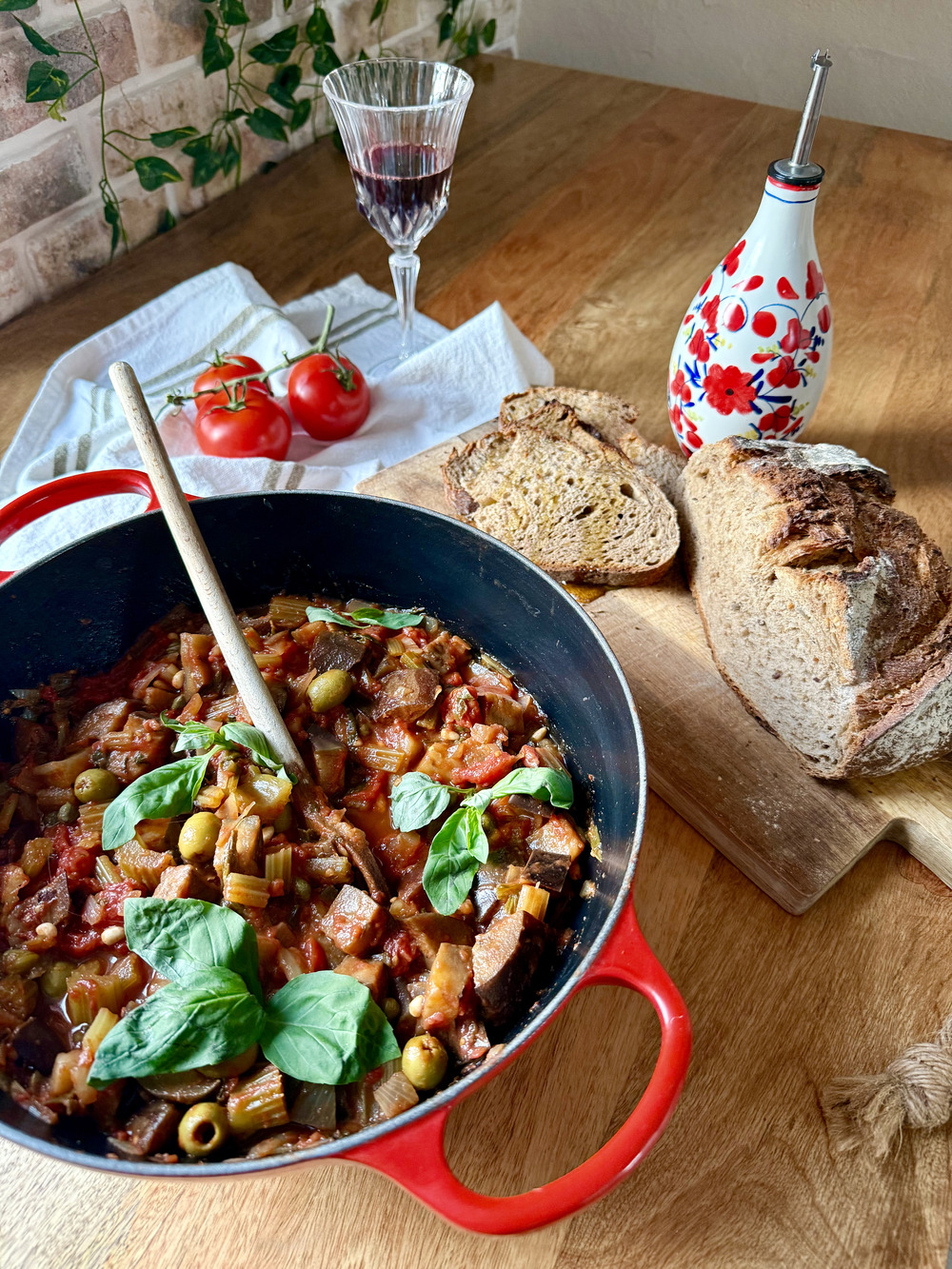
What if you brought a little Sicilian sunshine into your kitchen?
Picture delicately golden eggplant, tender tomatoes, olives, and capers bringing their bold Mediterranean flavors to the mix. As the ingredients come together, a beautiful balance of sweet, tangy, and savory notes begins to unfold. That's the magic of caponata: a deeply Mediterranean dish, both rustic and refined, that captures Sicily at its most delicious.
Discover traditional Sicilian caponata, a vegetable dish with its unmistakable sweet-and-sour balance, best prepared ahead of time and brought straight to the center of the table.
Served as an antipasto, a side dish, or simply alongside a few slices of crusty country bread, it embodies a certain idea of Italian hospitality: generous cooking, free from unnecessary fuss, where quality ingredients and a little time make all the difference.

Caponata brings to mind those summer afternoons when time seems to slow down. The eggplant gently browns, the tomatoes simmer with olives and capers, and the aroma of vinegar fills the kitchen with a bright, tangy note. You can already tell this is going to be a meal worth lingering over.
Then the dish finds its place in the middle of the table. Everyone helps themselves, discovers that delicate balance of sweetness and acidity, and happily goes back for another taste. An unpretentious recipe, yet one that stays with you.
— Casa Bandera, from our Famiglia to yours
Sicilian Caponata: A Balance of Sweetness and Bold Flavor
One bite is all it takes to understand what makes caponata so distinctive. Tender, delicately golden eggplant meets the natural sweetness of tomatoes. Olives and capers bring a savory, briny note, while vinegar and sugar create that signature sweet-and-sour balance, both lively and delicate. Each ingredient retains its own character, but it's the way they come together that gives the dish its remarkable depth.
Caponata is much more than a simple vegetable stew. It's a recipe built on contrasts, where textures and flavors complement one another without ever overpowering each other. It's just as delicious served warm as it is cold, and it actually benefits from resting for a few hours, giving the flavors time to come together.
That versatility also explains its place at Italian tables. Served as an antipasto, it opens the meal with plenty of character; as a side dish, it pairs beautifully with meat, fish, or other Mediterranean specialties. And when served simply with good bread, it can easily become the star of a leisurely summer lunch.
That's also what I love about this style of cooking: it doesn't try to impress through complexity. Instead, it celebrates quality ingredients, the pleasure of sharing, and those little details that turn an ordinary meal into a moment worth remembering. If you'd like to bring that same spirit to your own gatherings, discover how to host guests at home without the stress.
The Origins and Traditions of Sicilian Caponata
In Sicily, as is often the case with Italian cooking, there's no single way to make caponata. Recipes vary from one family to another and from one part of the island to the next. Some favor green olives and capers, while others add celery, pine nuts, or raisins. These variations are part of the dish's history and reflect a family cooking tradition passed down through generations, adapting along the way to local ingredients and individual tastes.
Originally, caponata belongs to a long tradition of making the most of a handful of simple ingredients. Eggplant is usually the star of the dish, often fried separately before being combined with a mixture of tomatoes, onions, celery, olives, and capers. Vinegar and sugar are then added to create the sweet-and-sour note that defines the recipe. The exact ingredients and proportions may vary, but the search for balance between sweetness, acidity, and Mediterranean flavors remains at its heart.
What matters most when preparing caponata is giving each ingredient the attention it deserves. The eggplant should be beautifully golden and tender, while the sauce needs to reduce enough to coat the vegetables without overwhelming them. After a few hours of resting, the flavors come together and the caponata reveals its full depth. That's one of its greatest advantages: you can prepare it ahead of time, making it a natural choice for a dinner party where you'd rather enjoy your guests' company than spend the evening in the kitchen.
And perhaps that's part of its charm. Picture a large serving dish placed in the middle of the table, a few slices of bread within reach, glasses being refilled, and conversations carrying on long into the evening. Caponata doesn't need an elaborate presentation. It simply invites everyone to help themselves and share. A very Italian way of approaching a meal, where generosity matters just as much as what's on the plate.
If you're planning a dinner party soon, you'll find more inspiration in our guide to planning an Italian dinner party from start to finish with a simple timeline. And for a more relaxed occasion, take a look at our ideas for a casual dinner with friends.
With its tender eggplant, tangy notes, and rich olive flavors, caponata captures all the generosity of Sicilian cooking. A dish full of character, deeply rooted in the island's culinary traditions, and a reminder that sometimes all it takes is good ingredients and a little time to create something truly memorable.
|
Information |
|
|---|---|
|
Difficulty 2/5 Cost low Preparation time 30 minutes Cooking time 25 minutes Gluten-free |
Portions 4 Calories 220 kcal Utensils saucepan, skillet, knife, cutting board, slotted spoon Seasons spring, summer |
|
Ingredients |
|
|
Eggplants 2 large Onion 1 Celery 2 stalks Peeled tomatoes 400 g Green pitted olives 50 g Capers, rinsed 30 g Pine nuts, a small handful Balsamic vinegar 2/3 tablespoon Extra virgin olive oil Salt & pepper Fresh basil leaves |
|
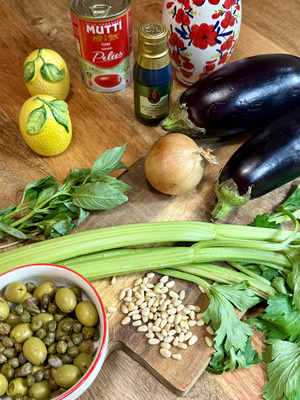
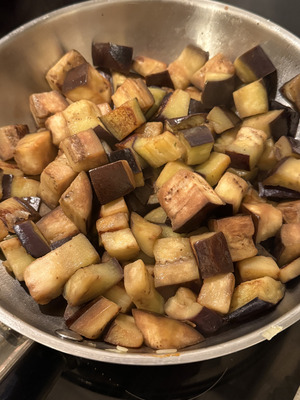
1 Cut the eggplants into large cubes, lightly salt them, and let them drain for a few minutes. Then fry them in very hot olive oil until golden brown. Drain on paper towels and set aside. The aroma already brings Sicily to mind.
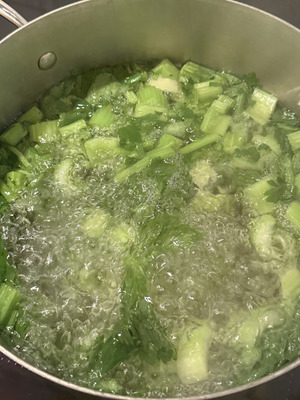
2 Cut the celery into pieces. Blanch in boiling salted water for 2–3 minutes. Drain and set aside. It will add crunch and freshness.
3 In a large pot, sauté the chopped onion over low heat in a bit of olive oil. Add the celery and crushed peeled tomatoes. Simmer for 10 minutes. The base is taking shape.
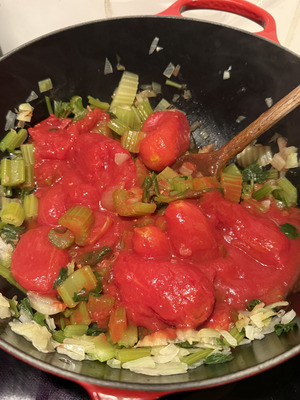
4 Stir in the olives, capers, and pine nuts. Mix gently. Flavors start to blend, balance begins to emerge.
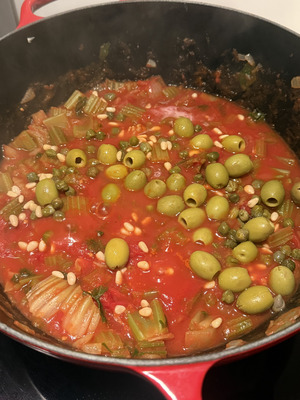
5 Pour in the balsamic vinegar. Stir and cook 1–2 minutes. The classic Sicilian sweet-and-sour flavor develops beautifully.
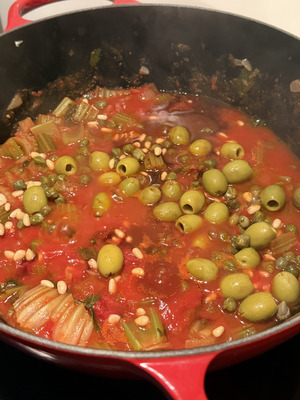
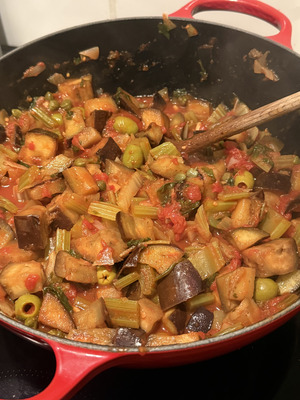
6 Add the fried eggplants. Gently mix and cook 5 more minutes over low heat. Remove from heat and add fresh basil. Let rest at least 1 hour. Even better the next day.
Recommended Food & Wine Pairing
To accompany Sicilian caponata, a light Nero d’Avola or a Cerasuolo di Vittoria perfectly highlights the sweet-and-sour vegetables and the richness of the eggplants.
Also discover our selection of Italian wine pairings.
Buon Appetito!
Also read: The Art of Italian Hosting: The Complete Guide to Creating Unforgettable Dinner Parties

Free Guide: 10 Golden Rules for Hosting Italian-Style



Let’s Talk Together!